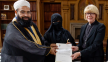
Conservative MP Nick Timothy has written to the Archbishop of Canterbury urging her to "reconsider" the Church of England’s controversial £100m fund to address historic links to slavery.
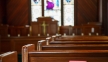
In his letter to Archbishop Sarah Mullally, the West Suffolk MP said the money would be better spent supporting struggling parish churches, including historic ones in his own constituency facing crippling repair costs - one to the tune of half a million pounds.
His intervention follows continued criticism of the Archbishop after she reaffirmed her commitment to the reparations scheme, officially named Project Spire, during a visit to the former British slavery site, Cape Coast Castle, in Ghana last week.
Timothy told the Archbishop that the proposed fund was not an appropriate use of Church resources and that he was deeply concerned by her support for it.
“Parish churches are the beating heart of our villages and towns, and they are a vital part of our inheritance and our national identity,” Timothy wrote.
“They are monuments to the glory of God. And they need all the help they can get.”
The MP said that, as a Christian, he shared the Archbishop’s “revulsion at the evils of slavery” but rejected the idea that Britain alone - and the British people of today - should bear the cost. He called slavery a "blight on the conscience of humanity as a whole" and one that Britain paid huge sums to eradicate. Moving ahead with Project Spire, he said, would be nothing more than "self-flagellation for its own sake".
"Nobody alive in Britain today was involved in the slave trade, and the great majority of us have no ancestors who were," he said.
Timothy went on to say that there was "no credible intellectual or theological basis" for the decision and that "we cannot repent the sins of others".
"Forgiveness is not conditional on the behaviour of different people and generations. The Bible says, ‘a son will not bear the iniquity of the father, and a father will not bear the iniquity of the son’," he said.
He concluded: “Taking these precious funds away from local parishes and handing them to other nations will not erase past injustices, and it will do nothing to help those who suffered and died as slaves.
“But it will do real and lasting harm to the communities that the Church of England is there to serve.”
Tim Dieppe, head of public policy at Christian Concern, backed Timothy’s criticism, saying the argument for reparations was based on "virtue-signalling" and "false humility and false guilt".
Speaking to TalkTV, Dieppe acknowledged that slavery was “an egregious crime” but he, too, criticised the commitment of such a large sum of money at a time when parishes are struggling to maintain their buildings, saying the decision was "bringing the Church into disrepute".
“People are sacrificially giving to the Church of England and they don’t intend that money to be given to some fake guilt, fake humility and virtue-signalling thing for something that was done 200 years ago,” he said.
He questioned how the Church could identify modern beneficiaries and why it had settled on £100m.
“The Church of England did not make a profit from the slave trade, so where did they calculate this figure of £100m from?” he asked.
“There is no actual proper basis for that figure.”
Dieppe said the Church should instead direct its attention towards modern forms of slavery, like sex trafficking and forced marriage.
“Let’s deal with actual slavery that’s happening today in Ghana and other places around the world,” he said.
“People are sex trafficked, people are enslaved, people are forced into marriage. That’s what the Church should be speaking into, that’s what the Church should be trying to do something about.
“If they want to do something about slavery, do something about the slavery that’s actually happening today.”
Conservative MP Katie Lam has also called for the money to be redirected towards church repairs.
“Let's scrap this divisive nonsense, and spend the money on preserving our national heritage instead," she said.
Baroness Foster said it was wrong to spend £100m on the fund when Church of England churches are "falling apart".
"Notwithstanding we the English were the ones who abolished slavery and it was the Arabs and African tribes who started the entire slave trade ... No wonder congregations around the country are in despair," she said.
Simon Knott, vice-president of the Suffolk Historic Churches Trust, spoke in support of Timothy's intervention.
“I'm not an Anglican, and I'm not a member of the party for which Nick Timothy is an MP. But I do care very deeply about Suffolk's historic churches,” he said.
“The Church of England's plan to use its resources for ‘reparations’ of this kind seems at once ill-thought out and performative, without any basis in historical reality, a kind of gesture politics that will do few communities any good and will do some communities harm.
“The churches that Mr Timothy mentions are national treasures. But more than this, the medieval parish churches of England are the greatest act of witness the Church of England has, a visible sign of its presence in every community, and if they are allowed to wither on the vine they will be symptoms of the Church of England's own withering away.”
The churches cited by Timothy in his letter to the Archbishop were All Saints Church in Gazeley, which had struggled to fund essential roof repairs needed to protect 16th-century wood carvings, the 1,000-year-old Church of St Peter and St Paul in Kedington, and St Margaret of Antioch Church in Cowlinge, which he said faces restoration costs of more than half a million pounds.
Richard Chapman, acting director of Faith and Public Life at the Church of England, has rejected Timothy’s characterisation of Project Spire, calling it "misleading and over-simplistic".
“I'd add it's disappointing to accuse a fellow parliamentarian of ‘gesture politics’ in a letter posted to followers on X, before the recipient has received it," he said.
Project Spire, officially called the Fund for Healing, Repair and Justice, was announced in 2023 after research commissioned by the Church Commissioners identified historic links between its predecessor fund, Queen Anne’s Bounty, and transatlantic slavery.
The Church Commissioners have said the £100m commitment will come from their investment assets and will not take money directly from parish collections. It will then be used to invest in communities affected by the legacy of African chattel enslavement - not to make payments to foreign governments or individuals.
Critics have challenged both the historical and theological basis of the fund.
Daniel Hannan, director of the Institute of Economic Affairs, said the argument in support of the fund "collapses on contact".
"Desperate to find something to apologise for despite its role in the forefront of the abolitionist movement, the Church of England discovered that for part of the eighteenth century, a sum set aside for poor clergymen and known as Queen Anne’s Bounty had been invested in the South Sea Company, which was involved in shipping enslaved people," he wrote on X.
"The investment was made by accountants acting on behalf of the church, almost certainly without instruction. Its vicars were, at the time, demanding abolition from the pulpit; its bishops were voting for it in the Lords; its congregants were raising money for anti-slavery campaigns; its missionaries were touring Africa trying to persuade local chiefs to manumit their slaves.
"None of that matters, though, because, across the period when the shares were held, they lost money. The Church of England’s profit from the South Sea Company? Zero."
In a separate post, he said, "The Church of England led the world to abolition. It is arguably the single greatest practical Anglican achievement."
An update to the Church of England General Synod last month confirmed that £1.15m has already been spent on the project, and that it has faced delays because of legal action.