
|PIC1|When African leaders meet their rich G8 counterparts next week the inevitable smiles will mask bitter disappointment over broken promises on both sides.
G8 nations are falling short of grand pledges they made at a summit in Gleneagles, Scotland, in 2005 to double aid to Africa by 2010. Western leaders are increasingly frustrated by Africa's lack of progress in tackling crises such as Darfur and Zimbabwe.
"I want to hold the G8 countries to their promise. When you sign a contract, you absolutely must stick to it," said Angelique Kidjo, a popular West African singer from Benin.
G8 aid to Africa will fall $40 billion (20 billion pounds) short of the Gleneagles pledge under current plans, according to a report last month by an Africa Progress Panel, which was set up to monitor implementation of the 2005 commitments.
But surging oil and food prices, an economic downturn in major G8 economies and tensions over world trade talks may push Africa down the agenda this time around.
Kidjo told Radio France International she and fellow anti-poverty campaigners like Irish rock stars Bono and Bob Geldof would be sending messages to G8 leaders - and they might even gate-crash the party at Hokkaido in Japan next week.
Geldof visited Sierra Leone last month to see for himself the impact of aid and private sector investment in the country ranked bottom of the most recent U.N. Human Development Index.
"While I'm no agriculture expert, something more has to be done here so that people are fed," Geldof said, describing Sierra Leone, part of what was once known as West Africa's 'Rice Coast' as "so green it makes Ireland look beige".
Geldof's prediction Africa would be "a giant economic power by 2040" might be a stretch, but there are reasons for optimism.
Japan, for example, has already met its Gleneagles pledges.
Sierra Leone will save $36 million this year thanks to debt relief, partly via a G8 scheme, and is using it to restore mains power which collapsed during a devastating 1991-2002 civil war.
But experts warn food inflation threatens to eat away at such progress as poor countries struggle to make ends meet.
"The rising cost of food must . play a central role during this year's G8, as currently 800 million of the poorest people on this planet cannot afford food because prices have risen by more than 40 percent," the Sierra Leone office of the British government's aid wing DfID said.
"If we don't deal with rising food prices the entire first Millennium Development Goal - to eradicate extreme poverty and hunger - will never be achieved," it said.
The U.N. Millennium Development Goals agreed in 2000 set out key targets to reduce world poverty by 2015, although many poor countries especially in Africa are not expected to achieve them.
TRADE TENSIONS
Rising food prices have also polarised positions over trade, just as World Trade Organisation talks on the "Doha Development Round" head to a key ministerial summit in late July intended to hammer out a long-delayed deal to liberalise global trade.
French President Nicolas Sarkozy, who assumed the rotating European Union presidency on Tuesday, has opposed dismantling EU agricultural subsidies which poor countries blame for keeping world prices low and for keeping their produce out of Europe.
"What African agriculture wants is open market access to Europe, but what Sarkozy is arguing for is more protection . Western G8 countries are under pressure from their domestic constituencies on this ," Alex Vines, head of the Africa Programme at London's Chatham House thinktank, said.
The G8 groups Britain, Canada, France, Germany, Italy, Japan, Russia and the United States.
The elephant in the room is China, whose massive demand for oil and commodities has thrown state budgets and inflation planning into disarray by pushing up prices and whose aid and investment packages challenge the role of Western aid in Africa.
Eager to secure mineral supplies, China has ramped up its commitments in resource-rich countries like Angola and Sudan.
A proposed $9 billion Chinese investment programme in Democratic Republic of Congo has threatened to derail IMF aid, a condition for the G8's own Multilateral Debt Relief Initiative.
Rising prices for Africa's commodities exports and increased foreign investment should strengthen Africa's bargaining power vis a vis the G8 and the Western-dominated IMF and World Bank.
Yet several African leaders due to attend the Japan summit - the same group represented at Gleneagles in 2005 - will do so in a significantly weaker position than three years ago. This includes outgoing South African President Thabo Mbeki and Nigeria's Umaru Yar'Adua, who was elected in flawed polls last year.
That will do little to mitigate the perennial problem of such summits: their remoteness from the realities of poverty.
As Kaly Jalloh, an unemployed youth of 19, said in Sierra Leone's capital Freetown: "We don't know anything about aid, but we know that poverty is too much."




-

The dire American political situation: a brief overview for faithful Christians in Britain
-

Conversion therapy ban supporters want prayer to be criminalised - this must not be allowed
-

Why the US election results do not bode well for America
-
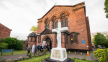
Police appeal for witnesses after head smashed off Jesus statue at church war memorial
-

Archaeologists may have discovered identity of mystery skeleton in Westminster Abbey
-

Are we seeing the end of Western civilisation?
Most Popular
related articles
Campaigning rockers challenge Sarkozy over Africa
Campaigning rockers Bono and Bob Geldof challenged French President Nicolas Sarkozy on Wednesday to increase aid to Africa, saying France was failing to live up to commitments it made at a G8 summit in 2005.
Thousands of paper chains tell G8 leaders to drop debt
Campaigners from Jubilee Debt Campaign formed a giant white band around Parliament Square in central London on Thursday to call on world leaders to 'Drop the Debt', ahead of the G8 meeting in Japan next month.
News
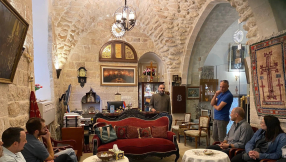
‘Major achievement’ hailed as Israeli officials step in to stop anti-Christian harassment
Harassment against Christian is sometimes justified by appeals to the Jewish religion.

What do Christian young women and men need to know about the opposite sex and themselves?
The first thing that Christian young women and men need to know is that the Bible is the operating manual for humans.
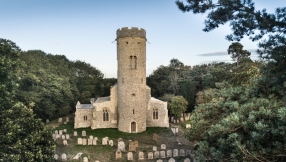
Saxon church saved from Historic England’s ‘at risk’ register after extensive repairs
Historic England has added 197 sites to its Heritage at Risk Register. However it has also managed to save dozens of buildings, including a 1,000-year-old church.

Trump’s midterm defeat and its implications for Christians on both sides of the Atlantic
America’s power and influence on the world stage, combined with Trump’s unpredictability and volatility, is a worrying mix.





