For decades now, the scientific community has been experiencing difficulty in developing a definitive treatment for cancer due to the fact that tumour's cancer cells are not all the same.
"The tumour is an evolving mass. Mutations change here and there. Mutations in one area of the tumour are usually different from mutations in other parts of the tumours," Dr. Sergio Quezada from the University College London's Cancer Institute said in a CNN report.
Acknowledging this difficulty, Quezada and his fellow researchers sought to develop a cancer treatment that will address the problem of cancer cells wildly mutating within a person's body.
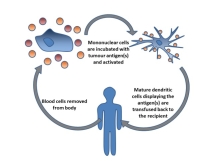
The researchers were able to reach a new breakthrough in cancer research by coming up with a treatment that capitalises on common mutations—the ones that could be isolated and fought off by certain immune cells.
Quezada likened the development of cancer cells to a tree. These cells may grow into different kinds of branches as they mutate, but they all start off with the same tree truck.
The treatment they developed, Quezada explained, sought to "chop the tree at the trunk rather than just pruning the branches."
In a separate statement for Cancer Research UK, the doctor compared cancer treatment to hunting down criminals. For years, medical practitioners were aimlessly chasing different kinds of criminals, but this new research strikes directly at the mastermind or the kingpin.
"The body's immune system acts as the police trying to tackle cancer, the criminals. Genetically diverse tumours are like a gang of hoodlums involved in different crimes—from robbery to smuggling. And the immune system struggles to keep on top of the cancer—just as it's difficult for police when there's so much going on," Quezada explained.
"Our research shows that instead of aimlessly chasing crimes in different neighbourhoods, we can give the police the information they need to get to the kingpin at the root of all organised crime—or the weak spot in a patient's tumour—to wipe out the problem for good," he added.
He further said that once the vaccines pass further tests and are finally made available, cancer treatment will be at its "ultimate personalised form."