
Thousands of Roman Catholics, many with posters urging Pope Benedict to visit, packed the largest cathedral in ex-Soviet Belarus to attend a papal mass broadcast into the building on big screens.
About 4,000 made their way late on Saturday evening into the 17th century cathedral in Belarus, where Catholics make up about 14 percent of 10 million residents. Hundreds more stood in a downpour in front of a screen in the square outside.
"I am just delighted to be here. Did you hear the applause when the Pope spoke Belarussian?" said Leonid, 46, a farmer from Grodno district, 70 km (45 miles) west of the capital.
"But I am a little disappointed because I had hoped, just a bit, that he would say he was coming to Belarus," he said.
The mass was translated into Belarussian, the country's official but relatively rarely spoken official language, and beamed into the cathedral with the help of state television.
The cathedral, turned into a sports hall in Soviet times, was dotted with posters in various languages reading: "Belarus greets the Holy Father and awaits his visit."
Belarus is accused by Western countries of infringing basic human rights and its president, Alexander Lukashenko, is barred from both the United States and European Union.
But though the country is overwhelmingly Orthodox, strife between different confessions is rare and both Catholic and Orthodox holidays are officially observed.
"I am so grateful for this, but I'm not sure to whom I'm supposed to be grateful," said Vladislav, 17, a student. "Is it the state? Someone else?"
Pope Benedict's predecessor, John Paul, visited several ex-Soviet states, but was unable to fulfil his dream of visiting Russia - or Belarus on its western border.
TENSIONS UNDER JOHN PAUL
Relations between Rome and the 220 million-strong Orthodox Church, divided since the Great Schism of 1054, became more tense under John Paul.
Russian Orthodox patriarch Alexiy II rejects a papal visit on grounds that Catholics have tried to poach congregations and claim property in ex-Soviet states, particularly Ukraine, home to more than 5 million mainly eastern-rite Catholics.
Belarus's top Catholic cleric, Tadeusz Kondrusiewicz, Archbishop of Minsk-Mogilyov, told Reuters last week that a papal visit was not yet on the agenda.
"I don't think a papal visit is very realistic for the moment," said Yana, 18, a student. "Our state offers more support to the Orthodox Church."
Lukashenko, who describes himself as an "Orthodox atheist", has overseen signature of an agreement with the Orthodox Church recognising its leading role in religious affairs. Catholics hope for a similar accord to establish them as the second faith.
They also hope the staging of Saturday's broadcast without official hindrance means a papal visit might come soon.
"This broadcast is already great progress," said Irina, 40. "Let's hope the authorities will let Benedict come."




-

The dire American political situation: a brief overview for faithful Christians in Britain
-

Conversion therapy ban supporters want prayer to be criminalised - this must not be allowed
-

Why the US election results do not bode well for America
-

Police appeal for witnesses after head smashed off Jesus statue at church war memorial
-

Are we seeing the end of Western civilisation?
-

Archaeologists may have discovered identity of mystery skeleton in Westminster Abbey
Most Popular
News
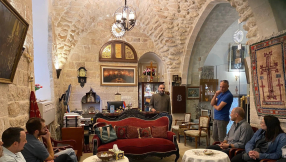
‘Major achievement’ hailed as Israeli officials step in to stop anti-Christian harassment
Harassment against Christian is sometimes justified by appeals to the Jewish religion.

What do Christian young women and men need to know about the opposite sex and themselves?
The first thing that Christian young women and men need to know is that the Bible is the operating manual for humans.
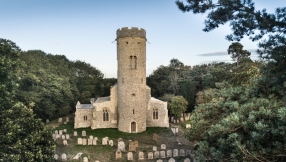
Saxon church saved from Historic England’s ‘at risk’ register after extensive repairs
Historic England has added 197 sites to its Heritage at Risk Register. However it has also managed to save dozens of buildings, including a 1,000-year-old church.
Trump’s midterm defeat and its implications for Christians on both sides of the Atlantic
America’s power and influence on the world stage, combined with Trump’s unpredictability and volatility, is a worrying mix.





