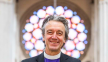
Children in the West need to understand what drives Islamist jiahdists to extreme acts of terror and murder, the Archbishop of Canterbury has said.
Justin Welby said: "It's very difficult to understand the things that impel people to some of the dreadful actions that we have seen over the last few years unless you have some sense of religious literacy.
"You may reject and condemn it – that's fine – but you still need to understand what they're talking about."
The Archbishop was addressing the head teachers of Anglican secondary schools at Coventry Cathedral.
He referred to the "religiously-motivated violence" of Islamic State.
Welby said that for the first time in centuries, religion was generating an "uncontrollable and destructive" influence around the world.
This has put the issue of conflict and religion at the top of the political agenda.
He told his audience: "No one before you in the last ten years as secondary heads has had to face the kinds of issues with religiously-motivated violence since the 17th century to this extent."
"Religious literacy has become essential to understanding people's motivation and ideas," he added. "That's a new experience for all of us, and for our politicians, and for our education system."
He said a recent study on Islamist terrorism, Inside the Jihadi Mind, published by the Tony Blair Faith Foundation and co-authored by Welby's son Peter Welby, made clear the driving force behind it.
Welby said this driving force was "an apocalyptic understanding of human history"
In strict terms, Islamic State believes that the world is about to end, that the Prophet will return with Jesus and that the Western powers will be defeated.
Threatening to kill such people obviously confirms their analysis of the world around them.
"But what do you do when they are exceptionally and extraordinarily violent, as they are?"
The narrative around religion has to be moved from a "prevent" narrative to a "vision" narrative, Welby said.
"We have to offer an alternative vision that is more convincing. That is more profound. That is more satisfying to the human spirit. And where to do we find a better vision than in the gospel of Jesus Christ, in the good news of Christ? And that's where you come in."
The Church of England educates a million children every day, he said.
The Archbishop last spoke on education in June, the day before the vote to leave the European Union. Brexit will affect every aspect of life including education, he said.
He warned against the danger of turning inward post-Brexit.
"Many of the countries around the world in which the Anglican Communion operates, where I go and hear and listen and work, there's this sense of turning inward, turning away from globalisation with its strengths and its weaknesses."