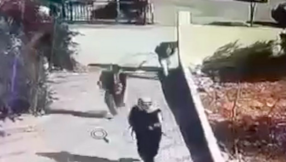
Terror is back on front pages, if it was ever off. The murder of Russia's ambassador to Turkey and the carnage in a Berlin Christmas market drive home yet again what desperate and wicked people will do to further their cause. Each incident shocks and appalls for a few hours or days and then is overtaken by the next. People, though, are bereaved forever.
We have lived with terrorism for decades. What's different about the outrages we face at the moment is their potential to catalyse terrible errors in public policy. They are carried out by Muslim extremists and feed a narrative of hatred and suspicion toward all Muslims. A man was arrested for the Berlin massacre and turned out to be an asylum seeker – whether he is the culprit is not known. So all asylum seekers become suspect and the rhetoric of Germany's far-right AfD party – and its equivalents in other European countries – becomes legitimised.
That there are real challenges faced by European nations struggling to integrate hundreds of thousands of refugees and migrants is obvious. But the danger is that the language of the Christian crusade starts to be used to combat the language of Islamic jihad – and in age when Western politics appears less stable than it has for decades, the potential for rhetoric to become reality is alarming.
So, for instance, in a typically forthright comment, Donald Trump said: "Our hearts and prayers are with the loved ones of the victims of today's horrifying terror attack in Berlin. Innocent civilians were murdered in the streets as they prepared to celebrate the Christmas holiday."
True enough, but then he added: "Isis and other Islamist terrorists continually slaughter Christians in their communities and places of worship as part of their global jihad." Yes: but they kill far, far more Muslims.
His conclusion? "These terrorists and their regional and worldwide networks must be eradicated from the face of the earth, a mission we will carry out with all freedom-loving partners."
That is the language of massive military force, of draconian restrictions on liberty, of a war on terror that is more terrifying than the terror itself.
And his follow-up tweet is revealing, too: "Today there were terror attacks in Turkey, Switzerland, and Germany – and it is only getting worse," he wrote. "The civilised world must change thinking!"
Today there were terror attacks in Turkey, Switzerland and Germany - and it is only getting worse. The civilized world must change thinking!
— Donald J. Trump (@realDonaldTrump) December 19, 2016 " data-caption="null" data-credit="null">Only, the attack on a mosque in Switzerland has not been shown to be motivated by Islamist extremism. Trump assumes, he does not analyse, and twists events to fit what he thinks they ought to be – and he is not the only one.
Let's be clear: if someone's loved ones are killed or injured by terrorists, they are going to want revenge. If a nation perceives its identity and values as being under threat from an alien invader, it will fight back – hence the rise of a frighteningly xenophobic populism in Hungary. But the task of responsible politicians is to do what's right, not what is popular. The last time Western powers attempted to bomb terrorism out of existence it did not go well. While they need to be rigorous about security, embattled leaders need to find the moral courage to resist acting out of hatred and fear toward people because of their religion, their ethnicity or where they came from.
And the task of responsible Christian leaders is to say, "Not in my name." The temptation to equate Christian civilisation with Christianity is terribly seductive. "God and country" is as theologically problematic as "God and" anything else. Christ is not defended by discriminatory laws, or by pulling up the drawbridge against migrants, or by guns and bombs. He is commended when his people live faithfully, lovingly and justly.
The sickening violence we have seen in Berlin poses challenges to Europe's security forces and to the rule of law. But it also poses challenges at a deeper level, to how we think about aliens and strangers and what we really believe in. If we think we can only react to violence with more violence – including the violence of unjust laws, discrimination and demonisation – we will fail comprehensively to stop it happening again. Grief, loss and anger are not a good context in which to say this kind of thing; but it has to be said, loudly and clearly, if Europe is ever to be at peace.
Follow Mark Woods on Twitter: @RevMarkWoods