The role of religion in helping to bring peace to the world is vital, according to Ecumenical Patriarch Bartholomew.
The Patriarch was speaking at the Al-Azhar International Peace Conference in Cairo – the same conference that will be addressed by Pope Francis on his two-day visit to Egypt .
'During the last two decades, humanity has experienced continuous terrorist attacks, which are the cause of death and hurt of thousands of people, and which are becoming the greatest threat and source of fear for contemporary societies,' said Bartholomew. 'Since then, religions have been often suspected or openly accused for inspiring terrorism and violence.'
He admitted religion can, of course, divide by causing intolerance and violence. 'But this is rather its failure, not its essence.'
The conference is organised by Al-Azhar and the Muslim Council of Elders.
The Pope is there to build bridges with Muslims and other Christian denominations.
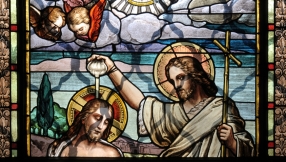
Pope Francis has already signed a new baptism agreement with the leader of the Coptic Church, Pope Tawadros II, meaning that for the first time, Catholics who convert to Coptic Orthodoxy will not need to be baptised again.
Bartholomew delivered the first of several keynote addresses from the many senior religious leaders, Muslim and Christian, at the event.
'Our everyday life has become filled with horrible news about terrorist attacks in the name of religion,' he said.
'At the same time, we notice the willingness and capacity in our world to promote dialogue instead of conflict. This is true, not only for political leaders and secular organisations, but also for religious leaders and institutions that have shown their readiness to engage into a dialogue of peace on a local and on an international level, in order to insure a pacific coexistence and collaboration between people.'
He asked why there had recently been an increase of violence, instead of in peace making.
He referenced the terrorist acts of Paris, Brussels, Istanbul, Saint Petersburg and Stockholm.
'How could we explain the ongoing wars, armed conflicts and bloodshed in the Middle East? How can we accept the attacks in the Coptic churches of Tanta and Alexandria about two weeks ago?'
Contrary to modern myth, society is not actually in a post-religious age but is actually entering a 'post-secular' age of 'religious explosion'.
He said: 'Religion appears as a central dimension of human life, both at the personal and the social levels. It claims a public role, and it participates in all central contemporary discourses.'
For centuries in the Mediterranean, there had been peaceful cohabitation of Jews, Christians and Muslims.
'This experience demonstrates that people from different religions can live together, finding the most fundamental message for humanity which unites, instead of being a source of division. It shows that religions can serve as bridges between people, as instruments of peace and of mutual comprehension, tolerance between human beings and of inter-religious dialogue.'
He insisted: 'Islam does not equal terrorism, because terrorism is a stranger to any religion. This is why inter-religious dialogue can chase away fear and suspicion. It is central for peace, but only in a spirit of mutual confidence and respect.'