Internet giant Google's automatic search suggestion function has been in the news this week, after allegations of mysterious political bias. It was discovered that while plenty of (quite negative) options appeared when you type in "Labour are..." or "Lib dems are...", doing the same for "conservatives" or "tories" draws a blank. Conspiracy theorists were delighted, while Google got defensive. There was no evidence of tampering, they said, claiming simply that "autocomplete predictions are produced based on a number of factors including the popularity of search terms", which is a bit like the high-level PR equivalent of responding to a difficult question by shouting "Oh look, a bird!"
The workings of autocomplete, along with the rest of Google's search technology, are a closely-guarded secret. Getting organisations to the top of its search rankings is a huge and lucrative industry, so you can understand its reticence to explain it too much. What it will say is that its algorithms make calculations based on the last 10,000 relevant searches, and that it takes into account "200 unique signals or clues that make it possible to guess what you might really be looking for".
It's probably not good science then to suggest that if it appears on Google autocomplete, then that's what 'everyone' is searching for. The results are however indicative. They do at least show what many people are interested in finding out. You're not going to base an entire marketing strategy on it, but it does give some fantastic (and occasionally quite scary) insights. Which got me to thinking... what does autocomplete reveal about the things which people are searching for around faith?
Here's what I found. I wasn't logged in, but I don't imagine for a moment that prevents Google from knowing a lot about me as I typed. Again: I'm not hypothesizing here that I've discovered the secret questions everyone is really asking, but the results were still interesting – and surprising.
Why does God...
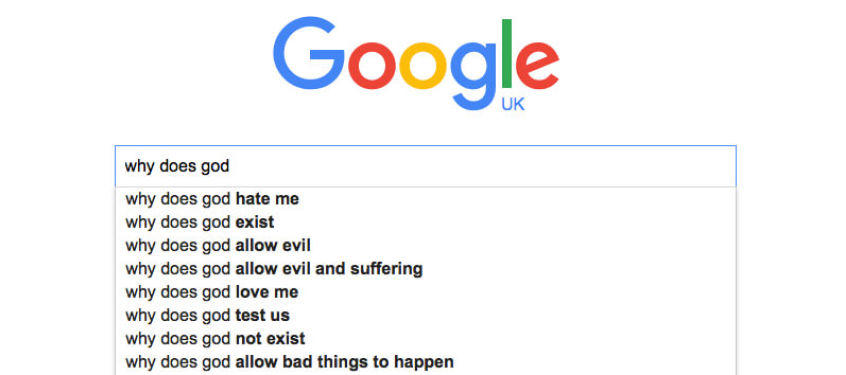
A pretty tragic revelation to start off with. The number one question people seem to be asking about God? Why he hates them. This obviously demonstrates a lack of understanding about the nature of God – he doesn't hate anyone – but even so it shows that a lot of people believe he's disapproving of them and their lifestyle. There's a big challenge there: what are we as Christians doing and saying that could lead people to that conclusion? Because whatever it is, it's almost certainly wrong.
Why did Jesus...
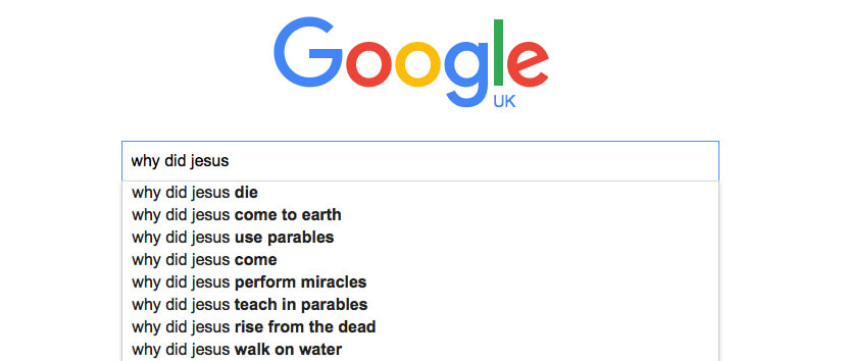
You might imagine there'd be more aggressive or loaded questions here, but in fact a lot of people just seem to want a bit more information about the reason for Jesus' actions. One possible reading of the top result is that in our post-Christian context, people simply don't know or understand the story because it's no longer part of the cultural furniture. A good reminder to churches – and to Christians – to make sure we explain ourselves clearly and well (without being patronising).
The Bible is...
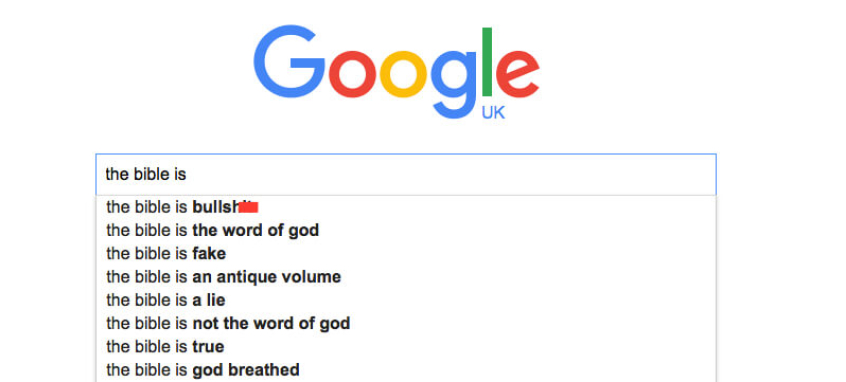
Well this one's a bit more inflammatory. This list of autocomplete options suggests a tension between users who think the Bible is God's word, and those who think it's got far more earthly roots. The fact that the top allowed term is a swear word (more serious terms of abuse would be blocked) should probably at least give us pause as we consider the modern cultural position of a book once seen as an authority in society.
Church is...
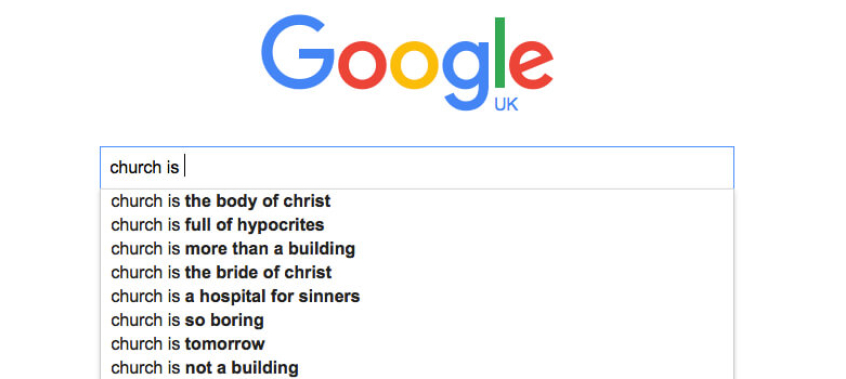
Broadly speaking, most of the searches around what church is are fairly positive; people trying to understand the metaphorical and biblical purpose of the Body. When you change the wording slightly however...
Churches are...
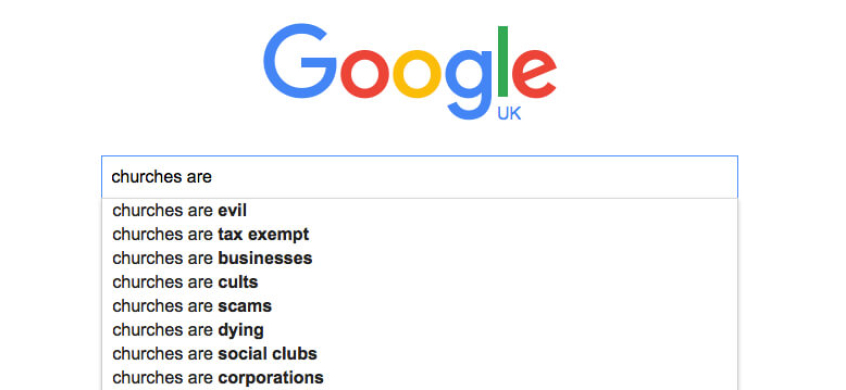
Wow. This is a much more negative view of church. It seems that when we talk about the concept of church, people are happy; when we start to unpick their feelings and experiences around individual churches, we quickly head into angry and opinionated territory. According to Google autocomplete, churches are evil, tax-exempt businesses which are scam cult social clubs. At least they're also dying, and I suppose that makes sense – I don't know anyone who'd want to be a member of something like that...
How can God...
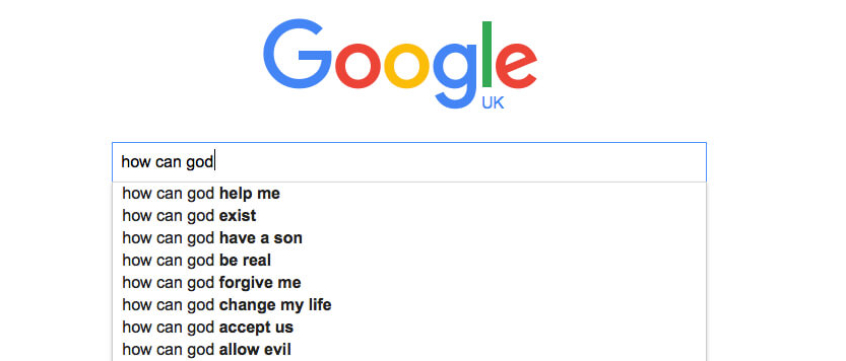
If like me you were expecting to see 'allow suffering' right at the top of this list, you'll share my sense of surprise. Instead, it seems people are asking if God is real, and how – if he is – he might be able to make their lives better. That's pretty good news for anyone who runs one of those scam social club corporations we were just talking about; it's also an encouragement that people still are asking those soul-searching questions – and not just the ones which stop at not understanding a God who seems to allow evil. The fifth option on this list "how can God forgive me", which suggests there may be many people out there who simply feel unworthy of his love – another challenge to make sure we've got our messaging right.
And for the conspiracy theorists among you...
Christians are...
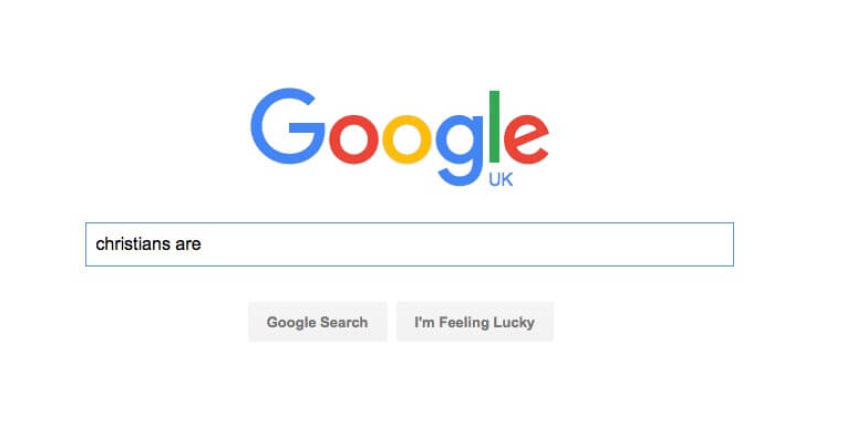
That's right – a conservative-style blank. Fearing they might inadvertently publish hate speech, Google seems to turn off autocomplete for this question, as presumably it does for all religions. But wait...
Muslims are...
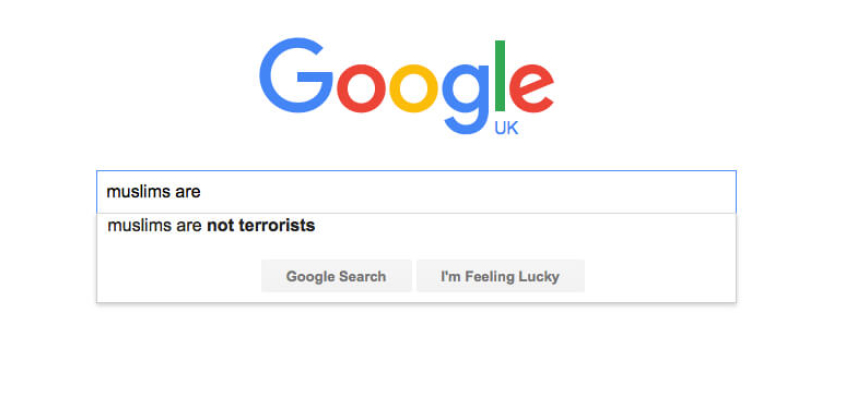
I'm just going to leave that one hanging.
As I said at the start, I'm not suggesting this is a major piece of research into the search habits of non-Christians, or the intent behind their faith-flavoured searches. I do think it's interesting though, and the results above do issue a few pertinent challenges to us as we think about how we might respond to the real-world questions of our friends and neighbours.
Martin Saunders is a Contributing Editor for Christian Today and the Deputy CEO of Youthscape. You can follow him on Twitter: @martinsaunders