Someone has suggested that we are simply a mind (accidentally) that happens to inhabit (accidentally) a body.
Shaping our bodies, as we want
This means then that our minds are pre-eminent, and reinforces our society's individualism – my right to choose is what's paramount. We might choose then to keep our body as it is (and have a termination of pregnancy – notice the language...), or to quit our body if it's suffering pain or distress that we can't deal with (euthanasia), or to augment our bodies if they don't match our ideal of what they should be like (hence botox, and the multi-million dollar beauty industry.) We might deem some bodies to be more acceptable than others – slim, white, young, privileged, tall, male (and develop a fashion industry and work culture accordingly).
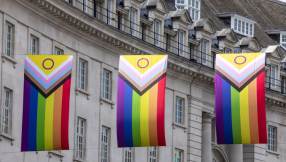
This understanding is behind issues of identity – if we think we are male, but happen to have a female body, then we alter the body to fit our mind. (Though we don't seem to apply that to people, usually females, who think they're fat when they're not, and who end up having an eating disorder.)
Different perspectives
Of course, there are counter developments to such trends – and these have become more prevalent in recent years; the fat-shaming development, the rise of 'Black Lives Matter' and 'Me-Too' movements, are some examples. The language of human rights, which derives from Christianity, cuts directly across the notion that people are essentially minds that happen to live in bodies.
Made in the image of God
This idea of a human being a mind that inhabits a body, shows up to be so reductionistic and limited when compared with a Christian understanding. In contrast, it's breath-taking to think human beings are made in the image of God. The image of God!
But what does that actually mean?
I think of my one year-old grandson whom I cared for yesterday for about two hours. He has just turned one, and already is able to show something of the characteristics that mark a human being, and which show how we are made in God's image.
Firstly, he can communicate. He smiled and laughed at me, chuckled at my noises and singing, and repeated a couple of my words. An 'oh-oh' was uttered if he dropped something. Secondly, he could create. With a plastic container, he put items in and out, using them as tools and playing some kind of game with them. He could also show that he cared; a head on my shoulder, a sort-of-kiss on my cheek.
He certainly could choose – when I gave him lunch, he made it quite clear he wasn't going to have the cooked carrot pieces or asparagus. No, it was the peanut butter sandwich, followed by banana, that he went for. And he certainly knew when he wanted some water to wash it down – and chose to drink it himself from his mug.
All these traits – and more – are part of being made in the image of a God who creates, cares, communicates, and chooses, and who has a sense of humour.
Each person, utterly unique
During these interactions, my grandson showed his unique individuality. He is different from his older brothers, or any other grandchild I have, and from my own children. He's only been 12 months in this world, but his individuality is clearly evident.
But what about a year earlier? When he was born, was he still fully human? Of course – and even if his development wasn't 'normal' for his age, or does show itself to be quite limited at any stage of his life, he is unique – he has his own DNA, his own fingerprints, and there is no one else like him.
When does a new human begin?
Going back nine months earlier, was he made in the image of God at conception? Or was he merely a bunch of cells that rapidly divided and grew, and implanted, until he became a full-term human being at birth? (If a baby is regarded as simply as a foetus, or 'product of pregnancy,' then as a bunch of cells it can more easily be removed, if the mother so decides.) Once conception has occurred all the latent human potential has begun to develop. Sex is determined, and a human being is on his/her way. (There are a variety of views as to when a foetus becomes human – some think when a heartbeat can be detected, others prefer when a foetus is viable, and still others see a baby as having human rights only after he/she has been born.)
That is why a decision to abort is such a huge one. It's not a matter of 'my body, my choice', because even at the beginning of pregnancy, the embryo is not merely some part of the mother's body to be removed, like an appendix. Another unique human being has begun.
Being human – and our faith
How we think about our bodies has many implications for our faith. When Jesus rose from the dead, it was a bodily resurrection. He wasn't simply a 'mind' who happened to appear in a human form. His resurrected body was congruent with his earlier body; he could show the scars in his hands and side to a sceptical Thomas. A medical understanding of human beings shows how the mind influences the body when we look at psychosomatic conditions – and also how the body influences the mind. The body is not merely a 'container' for the mind.
The Psalmist described human beings as being 'fearfully and wonderfully made.' How true that is, especially as we learn more and more about what we are as human beings. This learning also enlarges our understanding of what it meant for Jesus to be incarnated as a human being. No wonder we celebrate this amazing reality every Christmas!