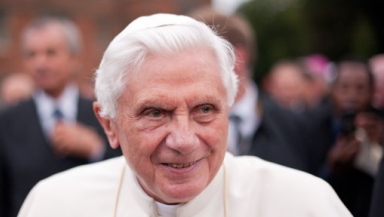
It was in his usual quiet way that Pope Benedict XVI dropped a bombshell to the Catholic world – indeed, the world – that he was to resign at the end of this month. Such an unprecedented move in modern times left even the Church's own leaders gasping - the Catholic Church in England and Wales apologised for a delay in tweeting the news on Twitter because it needed to "corroborate".
In some ways, such a carefully considered departure is fitting for a Pope regarded as one of the finest intellects around today. On that level, his shoes will be hard to fill. There have been controversies – such as his Regensburg lecture on Islam and his decision to lift the excommunication on a Holocaust denying cleric. Questions also remain as to whether he could have done more to root out paedophile priests, although his abhorrence of the evil being perpetrated was always clear and efforts to meet victims and hear their stories were sincere.
Despite setbacks and challenges, he won deserved admiration not only for his intellect but his ability to convey complex ideas with easily digestible clarity – a gift his Anglican counterpart did not share. The gentleness with which he expounded his view won fans even from among sceptics, as was seen during his memorable visit to Britain in 2010 when he gave a fatherly slap on the wrist to the nation's leaders for their overzealous secularising.
There is some speculation that the next Pope will hail from Africa or Latin America. More important than where the next Pope comes from is what he will do. The world within which the Church exists is rapidly changing. The Church continues to lose ground in its hitherto European heartland, while growing virtually everywhere else. An African or Latin American Pope would be unprecedented and a refreshing shift in tone for a Church that is regarded as too eurocentric for some.
Much has been said of the Pope's courage in resigning. Indeed, it shows his deep consideration for the good of the Church and the possibility of the election of a younger and more robust man to take over a demanding role. Importantly, it sets a precedent for future Popes that they do not need to cling on to the bitter, enfeebled end. His decision to pass the reins on to a more physically able leader will be an enduring legacy.
Although a deep thinker and theologian, he did try his best to relate and communicate with his flock, making efforts to keep the Vatican apace with the dawning new era of social media, most recently launching his own Twitter page. It is into this digital age that the new Pope steps and he will need to use every tool at his disposal to speak to a generation that does not necessarily understand or relate to the Catholic Church's rigid structures or world view. Pope Benedict understood that the solution was not compromise but better communication.
Interestingly, he departs from the helm of the Catholic Church in the midst of its "Year of Faith". The global yearlong initiative has at its heart the reinvigoration of personal Catholic faith. Pope Benedict has called faithful Catholics to deepen their faith and when all the politics is stripped away, this is what the vast majority of practising Catholics are most concerned about. Whatever reforms the next Pope does or does not introduce and wherever he comes from, ordinary Catholics will be looking foremost for a leader who can speak intelligently for them on an international level, and guide them in living out their faith in a largely unbelieving and often unsympathetic world.