
|PIC1|Why do good in what seems to be a hopeless world? This was the question posed by Church of England Bishop N T Wright to students at Harvard University.
In a post-September 11 world where the Aids epidemic and credit crisis are ailing millions, "why should we try to make a difference at all?" he asked. "Why should we try to do good ... to create good things out there in the world when in fact all the hope that our society has lived on seems to be imploding all around us?"
Ultimately, it is the belief and hope that the world will be good and ordered as it was in the beginning.
"The point of creation in the Bible is that the world as we have it is essentially a good place," Bishop Wright said. "One of the worrying things about some creationists is that having said the world was created in [six] days, that's all they're really interested in, and then the name of the game is to leave the world behind ... and let it go to hell while we go off somewhere else called heaven. If you were a genuine creationist, you shouldn't be thinking like that. The point of the stories in Genesis is not the chronology of how it was done but the 'why' that it was done."
Wright was speaking at a recent evangelistic outreach at the Harvard campus in Cambridge, Massachusetts. The event was sponsored by InterVarsity Christian Fellowship, a nationwide evangelical campus organisation, which aimed to engage students and faculty in dialogue on questions regarding life's ultimate purposes and Christianity's claims regarding hope.
Contrary to popular belief, heaven is not the end of the world or the ultimate goal, Bishop Wright stated. It is just phase one. There is, he continued, a "new heaven and new earth" – in other words, a renewal or recreation of the cosmos. He called it a "world put to rights".
And humans are a part of that remaking.
"Whether you think we're the product of blind chance, a random blip of evolutionary mutation, or whether you think we are the deliberate creation of a good and wise God, as Jews and Christians have always taught, you can't get away from the fact that most humans most of the time think of their life as having some kind of purpose," said Bishop Wright, author of 'Surprised by Hope: Rethinking Heaven, the Resurrection, and the Mission of the Church'.
That purpose is not just to prepare for heaven and hope that on the day of Jesus' return everything will be made right again. Instead, it is about making changes right now and taking steps until the entire cosmos is renewed and "rescued from slavery", as the bishop put it, citing the Old Testament passage of the Israelites being rescued from slavery in Egypt and reaching the promised land.
"There is no reason to despair. The God who made the world still loves the world and He is calling us ... to share in the work of putting it straight at last," said Bishop Wright, who taught New Testament studies for 20 years at Cambridge, McGill and Oxford Universities. "And what we do in the present in this world matters because it can be part of the new world when God remakes the whole thing."
Speaking to current events, Bishop Wright highlighted the election of America's first black president and the change that many expect will come with a Barack Obama administration. "Change is the word on everybody's lips," he acknowledged. "What's it going to mean?
"What change is going to come about through the election not only of the first black man to be your president but a man who embodies and articulates a very different view of the world and our role within it?"
As the United States stands at the cusp of key issues, including the economy and global power, what happens in the coming years may set a course for America and the rest of the world, Bishop Wright noted.
He warned that in the midst of several crises, America and the world face the danger of making changes just for pragmatic and short-term reasons.
We should not address these issues by trying to move just one or two steps, Bishop Wright said, but we should take steps toward something much more long-term – the hope of a world put to rights. And change is not going to come, he indicated, without hope and without the Holy Spirit.



-

From Tyndale to today: The enduring hunger for the Bible
-

500 million Christians worldwide face Bible access restrictions, report finds
-

800 years on: Why St Francis of Assisi still captivates the world
-
More than 4,200 Christians killed in Nigeria this year - report
-

Franklin Graham preaches with warning from Sodom in Manchester
-

‘We don’t want to lose the Holy Spirit as well as our skills’: What AI means for the Church
Most Popular
News

Winnie-the-Pooh centenary marked with new Christian reflection resources for schools
Church schools are being invited to explore Christian values through the much-loved stories of Winnie-the-Pooh as part of new resources produced to mark the character’s 100th anniversary.

UK ranks seventh globally for daily Bible App use as searches for anxiety and hope rise
The UK has ranked seventh in the world for daily Bible App engagement, as new figures from YouVersion suggest growing numbers of people are turning to Scripture for reassurance, guidance and spiritual support.
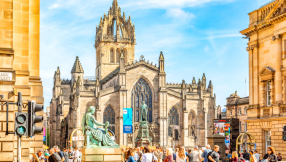
Scottish cathedral to charge non-Scottish visitors £12 entrance fee for first time
The Church of Scotland is struggling to hold on to its historic buildings.
SNP decision to drop extreme abortion motion welcomed
For some people, there can never be enough abortion.








