
The Hamas government, often labelled by the international community as Islamic militants, has promised to donate US$50,000 to prepare Bethlehem for the traditional Christmas holidays. The offering will be twice as much as given in previous years.
|PIC1|Known to be struggling financially, Hamas, has decided to donate the cash to Bethlehem, which is currently only sparsely decorated currently.
Even though the extra cash has been promised, it may not be enough to restore festivities to their fullest in the region, engulfed in Israeli-Palestinian fighting for the past 6 years.
Poverty is known to be affecting the area, and with Israel's West Bank separation barrier large numbers of Christians are now being seen leaving Bethlehem.
In 2005, just 2,500 foreign visitors toured Bethlehem during the Christmas season, compared to more than 90,000 a month prior to 2000 when the Palestinian uprising came about.
Local businesses are feeling the harsh reality of the ever-declining tourist economy. AP has reported that Abir Karram, who sells traditional hand-embroidered Palestinian dresses, can no longer afford to pay the 700 shekel (US$115) monthly rent for her workshop. Two years ago, she had 30 women working part time for her. Now she has no workers.
"The wall stopped tourists and Arabs from Israel," she said about the separation barrier, which is meant to stop Palestinian suicide bombings.
"Now people here have no salaries. It's like a well that finished drawing water," Karram added.
A 2004 United Nations report has estimated that about 10 percent of Christians had left Bethlehem following the violence up till that point.
The offering of extra funding has been greeted with mixed reactions among local Christians. Some have said they suspect the Islamic militants hoped to gain support from the international community; "It's just for show", said one anonymous elderly woman, according to AP.
Another Palestinian Catholic believed that Hamas should have given the money to the needy, but was sure that it was a sign of goodwill: "I appreciate it, because Bethlehem is the symbol of peace."
The acting finance minister, Samir Abu Eisha of Hamas, said, "We don't fund any Islamic celebrations, but we want to fund this Christian festival, which is a special part of Bethlehem. As a Palestinian government, we hope our Christian brothers have a happy celebration. They are an integral part of Palestinian society."




-

Many Christians among the missing and dead after Nepal floods
-

Church vows to plough on with Project Spire
-

AI could become a ‘very dangerous master’, warns John Lennox
-

When Eastern Europe appeared to be going Protestant
-

Leaked SNP abortion motion 'deeply troubling'
-

MPs vote against assisted suicide in 'victory for hope, compassion and life'
Most Popular
related articles
International Leaders Call for Urgent Action to Heal Muslim-West Conflict
International Leaders Call for Urgent Action to Heal Muslim-West Conflict
Lebanese Villages Still Without Water after Conflict
Lebanese Villages Still Without Water after Conflict
Church of the Ark Discovered in West Bank
Church of the Ark Discovered in West Bank
Medical Ministers Bring Healing and Hope to Lebanon
Medical Ministers Bring Healing and Hope to Lebanon
UK's Top Religious Leaders Unite for Pre-Christmas Pilgrimage to Bethlehem
UK's Top Religious Leaders Unite for Pre-Christmas Pilgrimage to Bethlehem
News
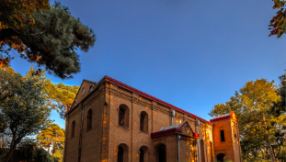
UN officials demand explanation for Iranian church seizure
Iran has not responded to questions fromUN officials.

AI could become a ‘very dangerous master’, warns John Lennox
Apologist and Oxford mathematician John Lennox warned Christians that artificial intelligence could contribute to a generation becoming increasingly disconnected from Scripture and cautioned that technology meant to serve humanity can become a “very dangerous master.”
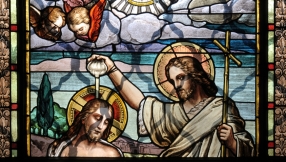
Catholic baptisms fall sharply across Ireland as births decline and secularisation grows
The number of Catholic baptisms taking place across the whole island of Ireland has fallen by almost 30% over the past decade, with declining birth rates and the growth of religious non-affiliation identified as the main reasons.
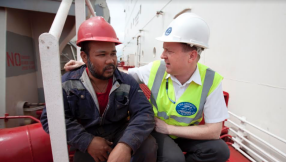
Against backdrop of conflict and tough working conditions, seafarer happiness falls
Seafarer wellbeing has declined for the second consecutive quarter as heavy workloads, restricted shore leave and concerns over pay increasingly weigh on crews, according to new research from The Mission to Seafarers.