The fuse has been lit – and all we now have to wait for is the explosion which will mark the end of Anglicanism as weknow it in the British Isles and Europe.
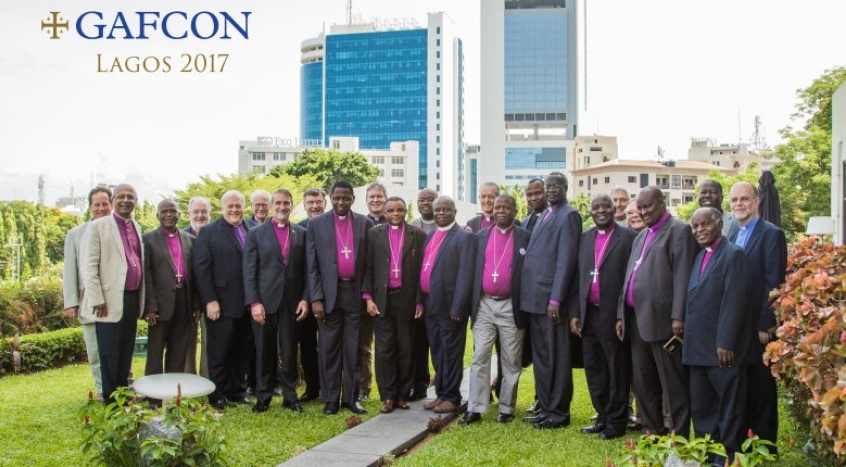
That, at least, is how some in the media and some in the church might well have us understand it, following the decision by the conservative Anglican movement GAFCON to appoint a 'missionary bishop' for the UK and Europe.
The decision by the GAFCON leaders – who claim to represent the majority of the world's Anglicans – is in response to two developments. Firstly, what they see as the imminent and inevitable 'rejection of Jesus' teaching on marriage' in the Scottish Episcopal Church. And secondly, the establishment of new Anglican congregations outside existing Church of England structures.
No doubt the prevailing narrative in some sections of the press and elsewhere will be something along the lines of traditionalists plotting to undermine Justin Welby, and the imminent death rattle of the denomination he leads.
And it would be so easy for us all to follow this media-led agenda and mindlessly climb aboard our automated hobby horses. Depending on our perspective on the major theological issues of the day we would then either be saying, 'It's outrageous and schismatic!' or 'It's long overdue and the Church of England has been doomed for years anyway'.
But may I suggest a different way? Firstly, in the New Testament, we are reminded: 'Everyone should be quick to listen, slow to speak and slow to become angry,' (James 1v19). And if there's one thing many Anglicans (including me) have not been very good at in recent years, it's the 'quick to listen and slow to speak' thing.
In fact it seems to me when reading the GAFCON primates' statement that actually they themselves are modelling an attitude in line with that Bible verse. Their communiqué does not seem angry; it does not take cheap pot-shots at others, and it contains no personal criticism of the Archbishop of Canterbury. Perhaps he would even call it 'good disagreement'.
Indeed, it goes out of its way to reassure many who might be dismayed or confused by its actions, declaring that 'faithful Christians may be called to different courses of action'. It continues: 'We bless those whose context and conscience have led them to remain and contend for the faith within the current structures.'
Secondly, as we consider how to react, it is important to be clear what the GAFCON primates are – and are not – proposing. They are certainly offering episcopal oversight to those Scottish Episcopal clergy who will effectively feel conscientiously 'de-churched' and excluded by the direction of that denomination. They are also clearly offering to provide a bishop for independent Anglican congregations, of which there are currently fewer than ten.
But they are not – so far as I can see – currently proposing alternative bishops for parishes within the dioceses and structures of the Church of England. Of course, they might do that in the future, or perhaps some clergy will initiate it, but the GAFCON leaders themselves do not seem to be suggesting it right now. The tanks are not on the lawns, although they are certainly on manoeuvres in some fields nearby. Or to change the picture, depending on one's preference, the lifeboats have not yet arrived, but they are picking up others within sight.
Ultimately, our view of this development is likely to be shaped by our foundational beliefs about issues such as the authority of the Bible, the nature of church unity, the place of church tradition in shaping belief – and, of course, the current presenting issue flowing out of all these, namely homosexual practice. In that sense, the GAFCON announcement is not unexpected, and seems an inevitable development arising from the conflicting trajectories of mutually incompatible theologies. These things have already followed such a path in North America.
But let's avoid brainlessly following any media over-simplification. Let's avoid silly Twitter tirades and pointless Facebook fisticuffs. We are followers of Jesus Christ. And whatever our personal view of this particular announcement, we can surely all agree with the concluding sentiments of the GAFCON statement, namely to pray 'for the continued renewal of the Anglican Communion' and also that 'in all these things Christ may be glorified and his name proclaimed faithfully to the nations'. Hopefully, I trust, we can, all of us, say a heartfelt 'Amen!' to that.
David Baker is a former daily newspaper journalist now working as an Anglican minister in Sussex, England. Find him on Twitter @Baker_David_A