
Fiji’s Methodist Church has cancelled its annual conference for fear of more arrests after two months of confrontation with the interim government.
The Church says it “does not accept government action” and is looking at “other ways of expressing” its opinions.
The Church has also informed Rewa provincial female Chief Ro Teimumu Kepa of the cancellation on Monday. Kepa was arrested along with nine members of the Methodist Church earlier this month after inviting it to hold its conference in Lomanikoro following a visit to the village by a delegation of Church executives.
The assistant general secretary, the Rev Tevita Banivanua, says the arrested Church leaders are currently before the courts and fear the consequences if the conference were to go ahead as planned.
“When it comes to the people, the people would not take things lying down, that’s our worry. If some of their own ministers from other parts of Fiji come to the conference and then were taken up we feared the worse,” he said.
On 30 July, Banivanua and others met the interim government officials who gave permission for the conference but only with “strict conditions” – it must not contain a political agenda and two senior church leaders must be removed from the conference.
Fiji Methodist Church, the largest church in Fiji, has around 330,000 members out of population of just under one million, according to Aseri Vakaloloma, the defense counsel for the church leaders who have been released on bail.
Preparations for the conference have been ongoing for the last two years and is the biggest event in the Methodist Church calendar. It traditionally features a choir competition and is one of the main ways in which the Church raises funds. Last year, the Church earned more than $1.6 million through the conference.
The Church has had an uneasy relationship with Fiji's military, which seized power in a bloodless coup in December 2006. Its grip on the country was strengthened in May when President Josefa Iloilo abolished the constitution after a panel of senior judges ruled that the army government is illegal.
The conference was first banned on 29 May after Church executive the Rev Manasa Lasaro called upon the interim government to restore democracy. The government said the meeting could not be held unless the Church removed two leaders, including Lasaro, from the conference and refrain from political discussions.
Fijian Prime Minister Commodore Frank Bainimarama heads an interim administration that, despite strong international objections, has ruled out democratic elections before 2014. Bainimarama says he plans to stamp out official corruption and enhance the rights of Fiji's ethnic Indian minority before elections can be held.
Though they have cancelled the annual conference, the Church leaders also announced that they will soon hold an expanded committee meeting in Suva, the capital of Fiji.
Rev Banivanua, who is not among those facing a court trial, told Radio New Zealand that the cancellation does not mean the Methodist Church accepts what the interim government is doing and that it will look at "other ways of expressing" its opinions.




-

Many Christians among the missing and dead after Nepal floods
-

Church vows to plough on with Project Spire
-

AI could become a ‘very dangerous master’, warns John Lennox
-

When Eastern Europe appeared to be going Protestant
-

Around 300 Christians killed and over 200 abducted in Nigeria in July alone amid wave of attacks - report
-

Leaked SNP abortion motion 'deeply troubling'
Most Popular
News
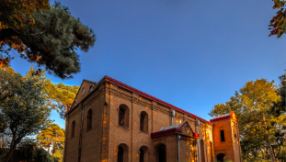
UN officials demand explanation for Iranian church seizure
Iran has not responded to questions fromUN officials.

AI could become a ‘very dangerous master’, warns John Lennox
Apologist and Oxford mathematician John Lennox warned Christians that artificial intelligence could contribute to a generation becoming increasingly disconnected from Scripture and cautioned that technology meant to serve humanity can become a “very dangerous master.”
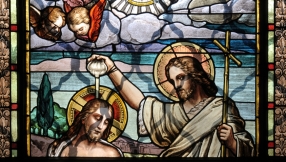
Catholic baptisms fall sharply across Ireland as births decline and secularisation grows
The number of Catholic baptisms taking place across the whole island of Ireland has fallen by almost 30% over the past decade, with declining birth rates and the growth of religious non-affiliation identified as the main reasons.
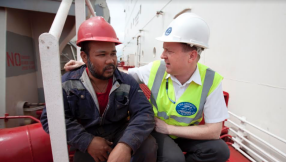
Against backdrop of conflict and tough working conditions, seafarer happiness falls
Seafarer wellbeing has declined for the second consecutive quarter as heavy workloads, restricted shore leave and concerns over pay increasingly weigh on crews, according to new research from The Mission to Seafarers.