The Church of England will stay invested in fossil fuel companies but with the view to pulling out later on if the big players don't listen to concerns regarding climate change.
At an afternoon debate in York yesterday, General Synod members voted almost unanimously in favour of new policies adopted by the Church's investment bodies. The Church is "called to protect the earth now and for the future", one of two motions carried said, while Synod was told that climate change is a spiritual issue, and one to be taken seriously.
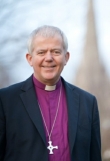
Climate change "calls for an urgent response from all of us – individually, institutionally, nationally and internationally. And that includes investors," the Bishop of Manchester, David Walker, said. "Warming at these levels will be so damaging to creation and to the world's poorest and most vulnerable that it is a moral imperative to ensure that it does not happen."
Walker added he was proud that under the new policy, the Church will divest from companies which derive more than 10 per cent of their revenue from the extraction of thermal coal or the production of oil from tar sands. "Through divestment from such companies, the Commissioners and Pensions Board have sent a prophetic signal...that there is an urgent need to move away from fossil fuels – starting with the dirtiest – and to transition to a low carbon economy," he said.
But is this enough?
The Church has put significant focus on engagement with fossil fuel companies such as Shell and BP, in which it has over £60m invested alone. Its policies suggest a belief that by remaining invested in these companies, and expressing the need for future change, it will be able to lever support and effect policy revision further down the line. "Make no mistake, our support for companies we engage with is not unconditional," Walker said. "The policy says that the investing bodies will divest from companies if, after engagement, we do not think they are taking seriously their responsibilities on climate change."
But after more than two decades of such engagement and no serious change as of yet, campaigners fear that for these companies at least, engagement with the Church is nothing more than a PR strategy. With no clear deadlines in place, there is no guarantee that the Church's threat to divest will be taken seriously.
Earlier this year, Shell and BP accepted shareholder resolutions on climate change submitted by the Church of England with a coalition of investors. However, Shell announced shortly after accepting the resolution that it will resume drilling for oil in the Arctic this year, a strategy entirely inconsistent with the global commitment to limit temperature rise to 2 degrees Celsius.
"There is a danger of being too reasonable," Synod member Rev Janet Appleby said yesterday, according to the Church Times. "Surely the threat of disinvestment will only be taken seriously if it is time-limited and specific. Deadlines focus the mind."
Another question that has to be asked is whether engagement and dialogue with these companies will ever change their core business strategy. The raison d'être of the fossil fuel industry is to explore and extract fossil fuels for profit, so the Church must believe that as a shareholder "they can do what has never been done before," in persuading an industry to abandon its core business, Christian charity Operation Noah points out.
"In the absence of regulation or some other financial driver, it is difficult to see how shareholders might persuade companies to leave a profitable resource in the ground."
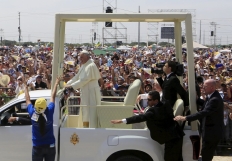
To be a truly prophetic voice on climate change, the Church has to assert its authority and recognise the message that remaining invested in fossil fuel companies sends to politicians and the public. It's a matter of integrity. Pope Francis, who has been a key voice within the faith community on climate change, last week insisted that "we can no longer turn our backs on reality". Perhaps it is time for the Church of England to take heed.