China bans burqa in major Muslim city

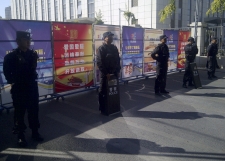
Women have been banned from wearing the burqa in the capital of Xinjiang province, home to China's largest Muslim community in an attempt to "curb growing extremism".

State media announced the ban in Urumqi, a city of 3.1 million people, on Saturday.

"Burqas are not traditional dress for Uygur women," the statement said. "The regulation is seen as an effort to curb growing extremism that forced Uygur women to abandon their colourful traditional dress and wear black burqas."

Uyghurs are a predominantly Muslim, Turkic-speaking people, who account for 45.8 per cent of the population in the northwestern region of Xinjiang, according to the 2010 census.

There have been a number of clashes between the Uyghurs and Han Chinese migrants in recent years. The Chinese government has promised to crack down on extremism in Xinjiang, and has blamed extremist terror attacks elsewhere in China on Islamists from this region.

But human rights advocates have said that the government's laws, which claim to tackle separatism and extremism, have infringed on the rights of the Uyghurs.

The announcement also made reference to the ban on the burqa in France and Belgium, both of which came into force in 2011.

The ban in Urumqi was approved by local government last month, but given the go ahead from regional authorities this weekend, according to CNN.


related articles
China targets \'wild imams\' in mass public sentencing
China targets 'wild imams' in mass public sentencing

China targets 'wild imams' in mass public sentencing

China: Judge calls for crackdown on terror in Xinjiang

China: Judge calls for crackdown on terror in Xinjiang

China announces plan to 'root out illegal religious activities'

China announces plan to 'root out illegal religious activities'

China: Cross torn down from Christian nursing home

China: Cross torn down from Christian nursing home

News
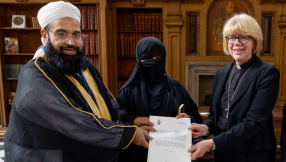
Archbishop of Canterbury withdraws award given to Muslim cleric who praised Bin Laden

Reform leader Nigel Farage said the decision to award Hafiz Muhammad Tahir Mehmood Ashrafi was "astonishing". 

How the new General Synod could move beyond the present disagreement over same-sex relationships

How might the next Synod make progress in the next five years based on a recognition that there are those in the Church of England who hold fundamentally opposed positions on the matter? Is there a way of allowing both sides to achieve what they want? Martin Davie argues that the answer to this question is ‘Yes.’

No part of London should become a free speech, gospel exclusion zone

Soho is not exempt from freedom of speech and Christian expression. And Christians do not lose their fundamental freedoms when they cross an invisible boundary into a neighbourhood associated with a different worldview. The streets of London belong to all of us, writes Andrea Williams.

Church of England blessing same-sex relationships 'a bridge too far'

Earlier this year the Church silenced a group of former-homosexuals who wanted to tell of the change in their lives.