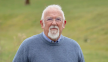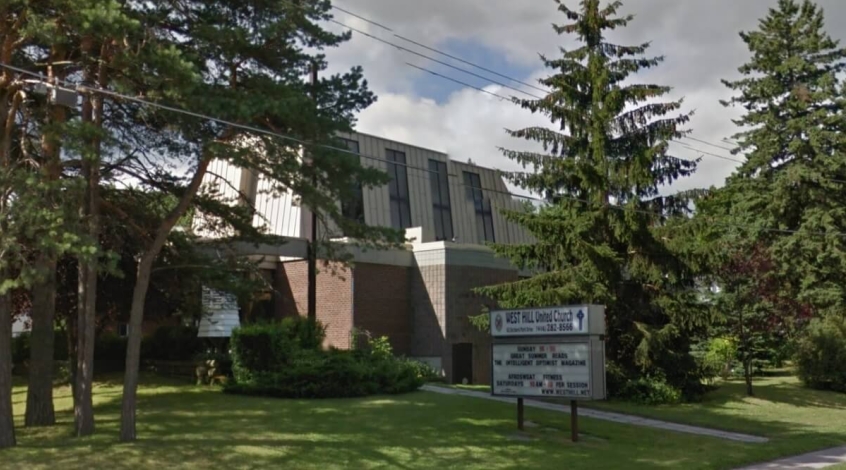
A Canadian church minister who is an atheist is being reviewed for 'effectiveness' of her ministry this month by the regional committee of the United Church of Canada (UCC).
Rev Gretta Vosper leads West Hill United Church in Toronto and she's pretty open about the fact that she doesn't believe in God. She blogs and speaks about it, and in 2008 published With or Without God: Why the way we live is more important than what we believe.
Although she told her church in 2001 that she was an atheist, and made it known more publicly in 2004, the Toronto Conference of the UCC has only recently called for the review of her ministry. A motion was approved at a meeting of the Conference's Sub-Executive on May 11 which asked for her to be interviewed on whether she still affirms the beliefs she stated in her ordination. A report is due from the review process on June 25.
Executive secretary of the UCC Toronto Conference, Rev David Allen, told the Christian Post that the review is "a formal process within the United Church which is ordered when serious questions have been raised about a minister's effectiveness."
Allen said that Vosper will face questions about whether she believes in God: Father, Son and Holy Spirit and "Are you willing to exercise your ministry in accordance with the scriptures, in continuity with the faith of the Church, and subject to the oversight and discipline of The United Church of Canada?"
The UCC's website says that ministers are required to be in "essential agreement" with the Church's basis of union, which includes belief in the Old and New Testaments and belief "in the one only living and true God, a Spirit, infinite, eternal, and unchangeable, in His being and perfections".
Questions around the issue of "essential agreement" surfaced in 2013, and at that time Vosper clarified her beliefs on her blog and her reasons for continuing to serve in the Church.
She said that she throughout her childhood and theological training she was given "metaphorical understandings of religious terms such as 'god' and stories such as the resurrection that helped me make sense of religion and my world" but since then she has come to believe "that using theistic language metaphorically without disclosing that you are doing so is a form of dishonesty in which I no longer wish to participate."
She sees the UCC as "a haven for those who are otherwise excluded, exiled, or marginalized by the church because their beliefs are not reflected within the language of its doctrine or who simply want to come together in community". And in this understanding of the church, she finds her sense of purpose in leading West Hill.
But she also acknowledged then that her position in the UCC is vulnerable. "The West Hill Board and I reflect from time to time (based on whatever challenging decision we may be wrestling with) on the possibility that I or we will be rejected by the United Church. Each time, we have determined that the cost of creating inspirational community beyond the beliefs that divide is such an important element of our work that we must take the risk involved."
In response to the UCC's current review, Vosper's church continue to support her. The chair of the church's board, Randy Bowes, wrote to the UCC to express his disappointment with the decision to conduct the review.
"The congregation at West Hill United Church is comprised of people with a wide diversity of theological beliefs. Some hold very traditional understandings of God, others self-identify as atheist or humanist, but most of us choose not to label ourselves at all... Any formal review of gretta's [sic] suitability for ministry based on her theological beliefs, whether or not any action comes out of the review, will be construed by many in the congregation as casting doubt on whether they are welcome within the United Church of Canada and risk creating a division in this community."
He added that although she does not believe in God, her leadership continued to be an encouragement to the church. "Her leadership inspires us, collectively and individually, to be attentive to what matters most. Her intentional efforts to create a barrier-free space for spirituality and growth within a safe environment have attracted many congregants who had left the United Church of Canada years before, disillusioned or hurt by the dogma of traditional faith."
The UCC is the largest Protestant denomination in Canada and has a reputation for being fairly liberal in its theology. West Hill Church does not require members (or clergy) to commit to a statement of faith, but instead has a 'Vision Works' document outlining their shared values. It includes key principles such as: "Our grounding is the interconnectedness of all life", "Our response to life is to love" and "Our sources for inspiration are diverse".
The Christian Post reports that there has now also been a proposal from the Hamilton Conference of the UCC calling for a review of the questions asked at a minister's ordination in light of the questions over Vosper's ministry.
Although Vosper is a rare example of a church leader continuing in ministry while admitting to not believing in God, a YouGov poll last year found that two per cent of Anglican priests (or one in 50) think that God is a human construct.
The survey asked 1,500 priests in the Church of England, the Church in Wales and the Episcopal Church of Scotland about their religious and social beliefs. In addition to those who don't believe in a personal God, nine per cent said that "No-one can know what God is like".
Sea of Faith is one organisation in the UK that provides a space for people who share the view that religious thought is valuable, but belief in God is a human creation. Rev David Paterson, a retired CofE vicar and a trustee of Sea of Faith and, said in an interview with Trinity College Dublin's University Times: "Once you have accepted that religion is a human creation, then it is like art and literature and things like that. They are an extremely valuable way to understand yourself."
He also clarified his position on belief in God: "By 'believe in God' I would normally mean 'put my trust in'. And that does not entail thinking that God is some sort of objective reality. God is the sum total – or the personification if you like – of our hopes, our dreams and our ideals...God is quite an important concept. But to talk about the 'existence' of God is a nonsense. God 'exists' only as a human idea."