
The Archbishop of Canterbury has spoken of his regret over the departure of five bishops to the Catholic Church but says he respects their decision.
Dr Rowan Williams has been in Rome this week for the 50th anniversary of the Pontifical Council for the Promotion of Christian Unity yesterday.
He told Vatican Radio: “Obviously my reaction to the resignations is one of regret but respect. I know the considerations they’ve been through, particularly the two who were my suffragans," he said.
"We’ve talked about it, we’ve worked through it and parted with prayers and blessings so there’s no ill feeling there."
The departing bishops are the Bishop of Ebbsfleet, the Rt Rev Andrew Burnham, the Bishop of Richborough, the Rt Rev Keith Newton, the Bishop of Fulham, the Rt Rev John Broadhurst, and retired bishops Edwin Barnes and David Silk.
Other Anglicans disillusioned with the Church's commitment to women bishops are expected to follow suit.
Dr Williams admitted that filling the vacancies would be a challenge.
"I think the challenge is going to come in sorting out what is really going to be possible for shared use of churches, working out perhaps some of the challenges on how we as Anglicans 'recommend' people, and of course there will be at least some parishes that will now be without priests so we have a practical challenge here and there to supply," he said.
Catholic cardinals have been meeting this week to hash out the details of the ordinariate, which will allow Anglicans to join the Catholic Church whilst retaining some of their Anglican traditions.
Dr Williams said the ordinariate would be "good" if it helped people to "evaluate Anglican legacy or patrimony".
"I don’t see it as an aggressive act, meant to destabilise the relations of the Churches and it remains to be seen just how large a movement we’re talking about,” he said.
It is not certain how many orthodox Anglicans will make the move to Rome. The Catholic Group and evangelical group Reform have indicated their desire to remain within the Church of England for the time being and hedge their bets on a defeat of the draft legislation on women bishops.
Forward in Faith and the Bishop of London have both recently announced the formation of new societies within the Church of England to bring together those who oppose the consecration of women bishops but who do not feel they could join the Catholic Church.
Dr Williams noted: “There are still a great many Anglicans in the Church of England who call themselves traditionalist who have no intention of jumping ship at this point, who are at the moment in considerable confusion and distress.
“But they don’t necessarily think if the Church of England isn’t working for them that the only option is Rome.”



-

UN officials demand explanation for Iranian church seizure
-

AI could become a ‘very dangerous master’, warns John Lennox
-

Archbishop of Canterbury withdraws award given to Muslim cleric who praised Bin Laden
-

Calls for Church of England to be 'rooted in scripture' ahead of General Synod elections
-

Most practising Christians are evangelical, study finds
-
How the new General Synod could move beyond the present disagreement over same-sex relationships
Most Popular
News

People view religious education positively, study finds
The government is consulting on plans to add RE to the national curriculum.
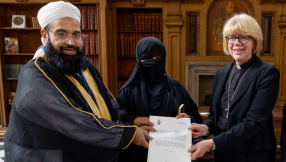
Archbishop of Canterbury withdraws award given to Muslim cleric who praised Bin Laden
Reform leader Nigel Farage said the decision to award Hafiz Muhammad Tahir Mehmood Ashrafi was "astonishing".
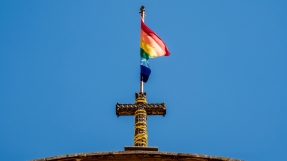
How the new General Synod could move beyond the present disagreement over same-sex relationships
How might the next Synod make progress in the next five years based on a recognition that there are those in the Church of England who hold fundamentally opposed positions on the matter? Is there a way of allowing both sides to achieve what they want? Martin Davie argues that the answer to this question is ‘Yes.’
No part of London should become a free speech, gospel exclusion zone
Soho is not exempt from freedom of speech and Christian expression. And Christians do not lose their fundamental freedoms when they cross an invisible boundary into a neighbourhood associated with a different worldview. The streets of London belong to all of us, writes Andrea Williams.








