As many as 60 members of her extended family were slaughtered, but Christian humanitarian worker Marguerite Barankitse chose to forgive the killers instead of crying out for vengeance.
She also chose compassion over hatred, and love over violence amid the civil war in her country, Burundi, that killed more than 300,000 people.
During the 13-year civil war (1993 to 2006) that engulfed the east African country, Barankitse is credited with saving as many as 30,000 orphaned children.
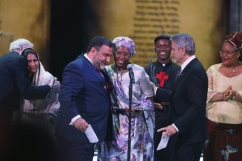
Last April, Barankitse received the Aurora Prize for Awakening Humanity, a prestigious award commemorating the 1915 Armenian genocide.
In an interview with the Christian Post, Barankitse said despite all the suffering and horrific atrocities she has witnessed, she never gave up hope on humanity, believing that no crime is too heinous not to be forgiven.
When the civil war began in Burundi, Barankitse founded the orphanage Maison Shalom, sheltering and saving children from the warring Hutu and Tutsi ethnic groups, despite tremendous risks and pressures. She said she once saw 72 people killed in front of her, but this did not stop her from taking and saving both Hutu and Tutsi children.
"When the war began, big war in 1993, the genocide, I saw atrocities. It was very hard for me, because they killed my family, many people, 60 persons in my family. It was the system that killed my family," she said.
She said she could not understand why both Hutu and Tutsi tribesmen have been killing each other since their nation gained independence in 1959 despite the fact that most of them are Christians and believe in the same God.
Barankitse said she decided to become a teacher and a humanitarian worker to contribute to peace and understanding in her country.
"I want the new generation, Hutu and Tutsi together, who will break this cycle of violence. I will raise them in dignity, and love. When you have conviction, nobody can stop you. I began with few children, 25 children who survived the massacres in the bishops house, and after that I took children during 10 years in the civil war," she said.
"I don't want to hate. I want to believe in human beings. For me, even criminals, they are still my brothers, and I will continue to show them the light."
She recalled Jesus saying on the cross, "Forgive them, Father, they do not know what they do," referring to Luke 23:34 in the Bible.
With this biblical verse as her guiding light, Barankitse vowed to spread the message of forgiveness and love to the children of the world.
"I teach children to love, even those criminals, because I do not hate them. I want them to be punished, I want them to go in front of the courts, and they must be judged. But I don't want them to be killed. Even if they are criminals, in their hearts they are still human beings. With love, we can heal the world," Barankitse said.