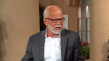
Tony Wales, who passed away on 28 October, was co-founder of Lion Publishing with David and Pat Alexander. Julia Cameron pays tribute.
Tony Wales, David and Pat Alexander together steered a ship which never lost its bearings. Lion Publishing was the first Christian publisher to focus on the general market. While the 1970s saw the opening of Christian bookshops across the UK, these were not the main ones in Lion’s sights.
Lion’s intended market was the High Street; its intended readers were outside the church. The sixties had changed everything, and people would become less and less familiar with the Bible, as fewer schools taught Scripture. Lion would bring biblical truth to people through WH Smiths, Blackwells, Barnes and Noble, and the Readers’ Digest. Its titles would introduce readers to a Christian perspective on a range of areas of life: cookery, fiction, history, art. All Lion books would be accessible to everyone, and jargon-free.
In 1973 Tony joined the Alexanders in a single office above a freezer shop. His responsibilities then ranged from book production to international rights. As the catalogue grew, Tony became Lion’s International Director, focusing on the selling of rights, and, from 1979, was able to build a small team around him. They travelled to the Americas, across Europe, to India, Africa and the Asia Pacific Rim.
Colour printing was still new, and expensive. Lion would harness new printing technology, following the early adopters in the industry, by creating pages in such a way that partners around the world could drop in translated text, using the same page layout. This meant high quality design could be shared.
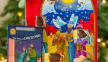
The first major Lion project was the Lion Handbook to the Bible (1973). When US Publisher Bill Eerdmans saw its page proofs at the Frankfurt Book Fair, he ordered 50,000 copies on the strength of a handshake. The handbook — soon regarded as Lion’s landmark title — has now sold over three million copies, in 30 languages.
The Lion Children's Bible went into some 40 languages, including Mongolian (1997). The first church in Mongolia was planted in 1991, so this book became widely-used by Christian families, and introduced Bible knowledge more widely, into thousands of homes. Within weeks of its launch, a letter from Ulan Bator declared it the best-selling book in the country, saying children were pleading with their parents to buy it.
Anthony Paul Wales was born to missionary parents in the Belgian Congo in 1944. The family returned to the UK when he was 10. He first wondered about a career in journalism, but then switched to publishing, first joining Rupert Hart Davis, then Thames and Hudson.
In 1966, aged 22, he was appointed Production Manager at IVP, then spent three years as an Inter-Varsity Fellowship (now UCCF) Travelling Secretary, working with students in art colleges.
While running a bookstall at a student conference at Swanwick he met Sue Lightfoot, a teacher in training from St Martin’s College, Lancaster, who would later become a researcher and lecturer in archaeology. They married in 1972.
To reach the widest possible audience, Lion partnered with mainstream publishers as well as publishers from all Christian traditions. Titles have now been translated into a total of some 200 languages, an A-Z from Adygei to Zulu. Lion became an affiliated member of the Publishers’ Association, the only Christian publisher to join this group; and Tony served on its International Committee for several years, participating in trade delegations to China and India with the chairs of Macmillan and Penguin.
He and David Alexander visited the Leipzig and Warsaw book fairs 10 years before the collapse of Communism. Lion opened its own office in the US, and Tony remained closely involved with the US market, as with the East Asian market.
Tony continued as Lion’s International Rights Director until he retired in 2008. His easy manner, ready humour, and modest demeanour won him friends and built trust as he visited countries. He himself read widely: biography, fiction, modern history, poetry, art.
In the 1980s, when Tony and Sue lived in West London, they became part of the International Presbyterian Church, founded by L’Abri, where Tony served as an elder for several years before they moved to the Oxford area in 1993, to be closer to the Lion office.
In retirement, Tony worked with Media Associates International (MAI) to help new publishers in tough contexts, particularly in countries with a soft currency and low GDP. His early training in book production was invaluable for this.
He led by example in raising money for scholarships so more people could take part in MAI training conferences. As he quipped: he ‘put the fun back into fundraising’, by ironing neighbours’ clothes, and then with two friends walking a hundred miles from Greenwich to Oxford (‘Three men in their boots’!).
Tony served on the MAI European board for six years, and contributed to training materials. He was especially concerned that emerging publishers grasp the principles of financial stability, contributing to the widely-used Profit & Purpose: A Global Publisher’s Guide for Financial Sustainability. His accrued knowledge and experience of worldwide publishing was perhaps unrivalled.
We thank God for Tony’s global influence. He will ‘shine like a star, as one who has led many to righteousness’ (Daniel 12:3).