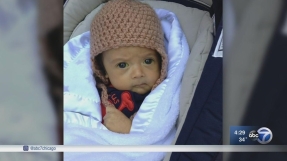
Although most people are right-handed, there's one thing that we — especially the mothers among us — tend to do using our left arm. That thing is in holding or cradling a baby.
Research has shown that 70 to 85 percent of women tend to cradle their babies using their left arm.
And humans are not the only ones that prefer to cradle their babies on their left-hand side. According to researchers, a number of animals—from walruses and orcas to kangaroos—tend to keep their babies on the left side as well.
Why is that so?
That question has baffled scientists for years. But now, the mystery has been unravelled.
A new study has shown that the phenomenon known as left-hand bias is an ancient evolutionary feature that helps humans, and animals as well, keep their babies safe, by allowing information to be processed by the right side of their brain, the Daily Mail reported.
Scientists from Saint Petersburg State University in Russia found out that this way of carrying babies boosts the latter's interactions with their mothers.
Left-cradling is the best way for a mother to notice and respond to a baby's behaviour, like tears, laughter or yawns, according to the study, which has just been published in Nature Ecology and Evolution.
Holding a baby in this position helps important infant responses to be sent to the right side of the mother's brain, which is used to process emotion. This helps in nurturing bonding between mother and child, the authors of the study said.
The authors explained that the muscles on the left side of the human body are controlled by the right side of our brains, and vice versa. They noted that both sides of our brains are responsible for different things.
For instance, the left side of the brain is generally used for language, which processes what we hear, how we speak and how we think.
On the other hand, the right hand side is responsible for face recognition, spatial awareness and listening to music.
The right hemisphere of the brain also helps us interpret what we see. This is the side of the brain that we prefer to use in cradling babies on the left since this way, we are best able to recognise their expression and determine their needs.