
The forthcoming marriage of Prince William and Kate Middleton is an opportunity to celebrate marriage on a grand and public scale. The Bible teaches that exclusive and lifelong marriage is a key foundation for society and in an age when marriage is downplayed, such a public wedding is to be approved.
I also find myself in favour of the monarchy. The sovereign fulfils important roles as head of state and hereditary monarchy has an often-overlooked merit: neither money, media pressure nor manipulation can get you the job. The crown cannot be bought, given or traded. The monarchy also adds stability to British politics: prime ministers and governments come and go but the monarchy endures.
Finally, the monarchy acts to defend the people against chaos or tyranny. Some people assume that societies automatically tend to democracy and the rule of law and so find little need for a monarch. But I am less optimistic; I believe that without God's grace, our desires tend towards selfishness.
I am also in favour of the royal marriage because I find the arguments against it unpersuasive. In some of them I detect an attitude where, although you do not actually want what your neighbour has, you are desperately anxious that they don't have it. That is a very long way from love or graciousness. Perhaps the main genuine argument against the royal wedding is its cost. Sometimes such arguments are reinforced by saying that the money could be spent on the less-well-off.
But there is a long tradition of disguising mean-spiritedness beneath a coating of morality. In John's Gospel, when Mary of Bethany poured an expensive perfume (worth a year’s wages) on Jesus, Judas protested that it might have been sold and the money given to the poor. The Gospel writer points out that his motives were actually far less honourable. I'm in favour of a genuine concern for the poor but not convinced that abolishing the monarchy is a wise way forward.
Beneath distaste for the royal wedding lies an aversion to the monarchy based on the feeling that it creates a system where ‘they’ are above ‘us’. Yet removing the monarchy would not produce an equal society; we would simply replace our official, time-honoured monarchy with a new and unofficial aristocracy based around money, power or fame.
We live in a hierarchical universe under God; we serve the king who rules over all – and that includes monarchs. This is symbolically stated at the coronation when the monarch holds two sceptres, one of which is the Sovereign’s Sceptre with a cross, which represents ‘the monarch’s temporal power under God’. Queen Elizabeth II has always made it abundantly clear that she feels responsible to God for how she carries out her role.
So I am convinced that the monarchy and therefore the royal wedding is a good thing. William and Kate, may you enjoy your wedding day and have a long, happy and richly blessed marriage.
J John is a Christian speaker and writer and founder of the Philo Trust www.philotrust.com




-

Edinburgh University ends divinity programmes as theology faces a changing future
-

Why the Archbishop of Canterbury’s award controversy matters
-

More than one in four US Protestant churchgoers believe some biblical truths become outdated
-

Catholicism in France has 'collapsed'
-

Christian leaders issue ‘sober and urgent call’ for Western Church to prepare for disruption
-

Australia's anti-therapy laws harm the most vulnerable - Britain should not copy them
Most Popular
News

Active faith linked to happier marriages and lower divorce rates, study finds
People who regularly attend church are more likely to report happy marriages, according to a new report examining the relationship between faith and family life.
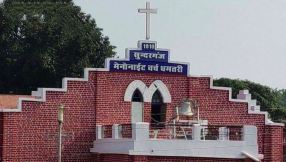
Indian churches fearing anti-conversion laws tell non-Christians: enter at your own risk
Churches in Dhamtari, a town in the central Indian state of Chhattisgarh, have put up notices warning non-Christians that they enter at their own risk, weeks after a law against religious conversion came into force in the state.

£1k bursaries to help churches develop youth and community mentoring programmes
Churches across the UK are being offered bursaries to help them establish mentoring programmes aimed at supporting young people and others in their communities.
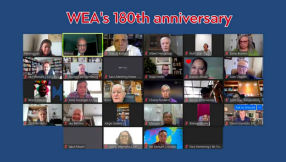
World Evangelical Alliance celebrates 180th anniversary
The World Evangelical Alliance (WEA) has held an online celebration to mark its 180th anniversary. Hundreds of people from more than 22 countries attended, and the event was rebroadcast to accommodate different time zones.








