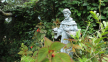
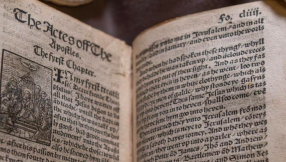
Today marks the feast day of Saint Boniface, the eighth-century 'Apostle to the Germans' who boldly brought Christianity to a pagan land.
The man known today as Boniface was born with the name Wynfrith, in Devon, England in AD 675. Wynfrith was ordained as a priest at age 30, but soon decided he was made for the missionary life and set out for Frisia, in the modern-day Netherlands. That trip was unsuccessful, but later the Anglo-Saxon ventured for Rome, where he met Pope Gregory II. In 719 the pope gave Wynfrith a new name – Boniface – and a new mission: to evangelise the Germans.
It was a challenging commission: in Germania the then-native religion was the worship of the Norse gods Thor, Odin and Balder. But Boniface found success, especially when he converted influential German chieftains, whose tribes would follow suit. The missionary tore down pagan idols and established churches and monasteries in their place.
One famous tale tells of Boniface demolishing an iconic oak tree in the town of Geismar. The 'oak of Thor' (or 'Donar's Oak') was worshipped by the local community, but Boniface had it cut down (some say he was aided by a miraculous wind) and the wood used to build a church dedicated to St Peter. Boniface lived to tell the tale: the locals thus decided that Boniface's god was mightier than Thor, and many converted.
Nonetheless, Boniface's bravery would cost him his life. On June 5, 754 he and his companions were attacked by bandits. An 80-year old Boniface reportedly insisted on non-violence, and told his allies to lay their weapons down. 'Cease fighting,' he reportedly said.
'Lay down your arms, for we are told in Scripture not to render evil for good but to overcome evil by good.'
There his life ended, but he became a much-revered saint, celebrated in the Catholic, Lutheran, Eastern Orthodox and Anglican traditions.
These words are ascribed to the medieval martyr: 'The Church is like a great ship being pounded by the waves of life's different stresses. Our duty is not to abandon ship, but to keep her on her course.'