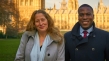
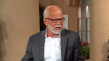
The Syriac-Catholic Archbishop of Homs has called upon the international community to lift sanctions on Syria, saying such a move would bring hope to the country.
Archbishop Jacques Mourad spoke of Syria as a place of great uncertainty since the fall of the Bashar al-Assad government late last year.
While fears that a hardline Islamist regime would replace it have not yet materialised, the extremist origins of the current government have left many citizens, even some Muslim ones, uneasy.
Speaking at a press conference organised by Aid to the Church in Need, the archbishop spoke of the presence of Islamist militiamen on Syrian streets.
“For the Syrian people, it is strange. It is foreign to them and to their traditions. They have never been confronted by such a rigid form of Islam. It is foreign to them, and there is a certain social discomfort," he said.
The archbishop added that Syria has always been a diverse place where people of different faiths and backgrounds meet.
He continued, “Our Sunni neighbours tell us that they are not happy with this new regime, and they say so to others, but among themselves, there is fear, because for the Salafists, if the Sunnis are not on the same page, they are considered blasphemers, and the consequence for blasphemy is death.”
So far the new government has made conciliatory gestures towards Christians and other minorities, however there have been concerns that its lack of control has led to excesses at a local level, either by rival militias or by groups theoretically controlled by the government.
In March hundreds of Alawites were killed in sectarian violence. Bashar al-Assad came from the Alawite minority and it is believed the violence may have been revenge attacks or possibly an attempt to prevent a counter-insurgency.
Calling on the international community to remove sanctions, Archbishop Mourad said, “The sanctions have had a terrible effect on the people of Syria. After the change of the regime, most people lost their jobs and now have no means of survival. Every day, people come to me looking for money to buy bread. This is the level we have reached. Most people don’t have enough to pay for heating. It has become too expensive.”
He said that lifting the sanctions would create work and opportunities, and improve people's livelihoods.
Despite the difficulty of the situation, Archbishop Mourad said he still had hope. In 2015, while still a monk, Mourad was kidnapped by ISIS and remained a prisoner for several months. He feels this experience has made him ready to face anything.
“For somebody like me, who has experienced interior freedom because of my captivity, there is nothing now that imprisons me," he said.
"Nothing puts me in a state of vulnerability. I contemplate my life and see that it is in the hands of God, and I am sure that He is guiding me.
"The one who has done this miracle for me and given me the miracle of returning me to freedom remains at my side. I see this for myself and for everyone, including for the presence of the Christians and the Church in Syria.”