
Sudan is scheduled to have a new government by 9th July it has been reported. Former Sudanese rebels, the Sudan People’s Liberation Movement, will join a new government of national unity by this date and a new constitution is set to be finalised the following month.
A peace deal to end the two-decade civil war in Sudan’s southern region was signed in January by Sudan’s government and rebels. The peace deal sketches out the new government system under which wealth and power will be shared between the north and south.
According to Reuters, Mansour Khalid, the political adviser to SPLM leader John Garang, said that the new government must keep promises to decentralise power in order to keep Sudan as one country. The deal agrees that the south can vote to withdraw after an interim period of 6 years.
"If we respect the boundaries between what is a state power and what is a national power, there is no reason for anyone in Sudan to want the country to disintegrate," said Khalid in an interview with Reuters. "We are determined -- and this is something on which we are not going to budge - that the interim period starts on July 9," he said.
At present, Khalid is working on the 60-member constitutional commission which began work this week. They will review a draft prepared by the government and the SPLM for four weeks.
According to Khalid, the constitution would fully protect the rights of non-Muslims in the capital of Khartoum, which will continue to remain under Islamic Sharia law. In the South where most it is mostly populated with Christians or animists, they will not be subjected to Sharia law.
He called on refuges that fled from the war to return to the south to help with the infrastructure, which is not very developed.
He admitted that U.S. sanctions imposed on Sudan were an obstacle to Sudan which needs much investment. The sanctions were due to be lifted by the United States after the southern peace deal was signed, but relations between Khartoum and Washington became sullen after a two-year conflict in Sudan’s western Darfur region.
The ongoing violence was condemned as genocide by the United States. The US holds the Sudan government and its allied militias responsible. Khalid expressed hope that the US would reconsider and lift sanctions by the end of the year to make the southern peace deal a success, which will likely help the violence come to an end in Darfur. "I hope that before the end of the year something will give... I'm sure they will review their decision on sanctions," he said.
The Sudan government has had to deal with a U.N. Security Council resolution passed in March which referred alleged war crimes in Darfur to the International Criminal Court. Though the government rejected the crimes, it has since said that it would cooperate only to a certain extent only in a national court.
"You have to recognise it as a fact. This is a resolution by the Security Council. There is no way for the SPLM or anyone else to say we don't care," he said.
When the SPLM joins the government in July, they would have a positive influence by hastening peace talks to find a political solution to Darfur and speed up national trials for war crime suspects in Darfur.




-

Edinburgh University ends divinity programmes as theology faces a changing future
-

Why the Archbishop of Canterbury’s award controversy matters
-

More than one in four US Protestant churchgoers believe some biblical truths become outdated
-

Catholicism in France has 'collapsed'
-

Christian leaders issue ‘sober and urgent call’ for Western Church to prepare for disruption
-

Australia's anti-therapy laws harm the most vulnerable - Britain should not copy them
Most Popular
News

Active faith linked to happier marriages and lower divorce rates, study finds
People who regularly attend church are more likely to report happy marriages, according to a new report examining the relationship between faith and family life.
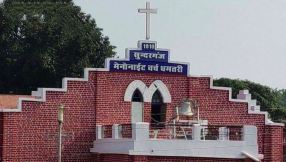
Indian churches fearing anti-conversion laws tell non-Christians: enter at your own risk
Churches in Dhamtari, a town in the central Indian state of Chhattisgarh, have put up notices warning non-Christians that they enter at their own risk, weeks after a law against religious conversion came into force in the state.

£1k bursaries to help churches develop youth and community mentoring programmes
Churches across the UK are being offered bursaries to help them establish mentoring programmes aimed at supporting young people and others in their communities.
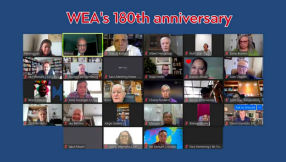
World Evangelical Alliance celebrates 180th anniversary
The World Evangelical Alliance (WEA) has held an online celebration to mark its 180th anniversary. Hundreds of people from more than 22 countries attended, and the event was rebroadcast to accommodate different time zones.








