In the Creation Story, God made human beings the stewards of His other creations. In Genesis 1:26, in particular, God said, "Let us make mankind in our image, in our likeness, so that they may rule over the fish in the sea and the birds in the sky, over the livestock and all the wild animals, and over all the creatures that move along the ground."
A recent study published in Science Magazine, however, revealed that we, human beings, are not doing our jobs as responsible stewards of God's Creation very well. Quite the contrary, human beings are now considered ruthless and unsustainable "super-predators" of other creations, a Huffington Post report said.
"In the past century, humans have become the dominant predator across many systems," the study, conducted by researchers from the University of Victoria in Canada stated.
The new research particularly highlighted how human's hunting practices have adversely and significantly affected food webs and ecosystems around the world.
The study pointed out that humans have become "particularly intense" in hunting down adult prey, with the aid of powerful killing technology.
"Hunters 'capture' mammals with bullets, and fishes with hooks and nets. They assume minimal risk compared with non-human predators, especially terrestrial carnivores, which are often injured while living what amounts to a dangerous lifestyle," Chris Darimont, one of the study's authors, explained.
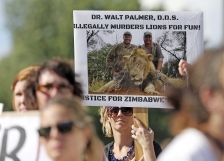
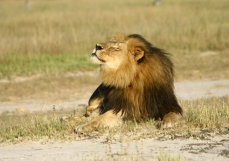
The research particularly found out that human beings kill top carnivores such as lions, wolves and bears, at a rate nine times more than these animals do themselves.
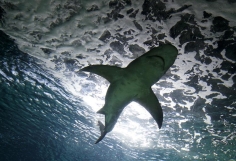
The predation rate is even more alarming when it comes to marine animals. The study showed that humans typically take out adult fish populations 14 times more than their own self-predation rate.
The research warned that this type of hunting activities from human beings is triggering extinctions, disrupting global food chains, and driving an evolutionary shift towards smaller fishes.