
A baby has been born from an egg matured in the laboratory for the first time. The egg was frozen, thawed, and finally fertilised before being kept in simulated conditions to allow its development and eventual birth.
The news has provided scientists with new data, as until now they could not say with any certainty whether or not eggs could survive after freezing and thawing to be fertilised successfully.
Scientists now say that the development may prevent women from the risk of having to take a fertility drug that can cause a rare, but deadly condition - ovarian hyperstimulation syndrome (OHSS).
The announcement was made in Lyon, France, by Canadian researchers, who added that three more babies were due soon by the same process.
They revealed that the new developments mean patients with cancer-related fertility problems may have new hope.
As women with cancer prepare for chemotherapy - a treatment that can cause infertility - patients may now be offered to have their eggs collected and frozen for future treatment in case they encounter problems.
However, some sceptics have pointed out that many will not want to delay starting their chemotherapy treatment to go through the process of ovarian stimulation - the process to extract eggs from the woman in preparation for their freezing.
It was also highlighted by Dr Hananel Holzer and colleagues at the McGill Reproductive Center, Montreal, that the technique they used - in vitro maturation (IVM) - had not yet been tried on women with cancer.
The studies they carried out were on women with polycystic ovarian syndrome (PCOS), a condition in which ovaries are overwhelmed by cysts, impairing their fertility.
The results of the study showed that of 20 women, four achieved pregnancy.
Dr Laurence Shaw, a spokesman for the British Fertility Society, told the BBC: "These pregnancies are an exciting step. However, the pregnancy rate is very low and therefore large numbers of eggs would be needed."
He also stressed that it was a treatment suitable for people with fertility problems linked to conditions such as PCOS or cancer, and was not for women who merely want to delay having a family.




-

Edinburgh University ends divinity programmes as theology faces a changing future
-

Why the Archbishop of Canterbury’s award controversy matters
-

More than one in four US Protestant churchgoers believe some biblical truths become outdated
-

Catholicism in France has 'collapsed'
-

Christian leaders issue ‘sober and urgent call’ for Western Church to prepare for disruption
-

Australia's anti-therapy laws harm the most vulnerable - Britain should not copy them
Most Popular
News

Active faith linked to happier marriages and lower divorce rates, study finds
People who regularly attend church are more likely to report happy marriages, according to a new report examining the relationship between faith and family life.
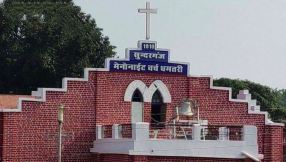
Indian churches fearing anti-conversion laws tell non-Christians: enter at your own risk
Churches in Dhamtari, a town in the central Indian state of Chhattisgarh, have put up notices warning non-Christians that they enter at their own risk, weeks after a law against religious conversion came into force in the state.

£1k bursaries to help churches develop youth and community mentoring programmes
Churches across the UK are being offered bursaries to help them establish mentoring programmes aimed at supporting young people and others in their communities.

World Evangelical Alliance celebrates 180th anniversary
The World Evangelical Alliance (WEA) has held an online celebration to mark its 180th anniversary. Hundreds of people from more than 22 countries attended, and the event was rebroadcast to accommodate different time zones.








