Pope Francis urged Latin America's leaders on Thursday to shun corruption and tackle gang violence, drug trafficking and the killing of women, which he said had become a 'plague' in his native continent.
Francis also addressed migration for the second straight day, saying more had to be done to overcome fears and suspicions because migrants were seeking a better life.
In a meeting with bishops from Central America, Francis said many young people found themselves 'boxed in and lacking opportunities, amid highly conflictual situations with no quick solution: domestic violence, the killing of women – our continent is experiencing a plague in this regard – armed gangs and criminals, drug trafficking...'
At least 2,795 women were victims of femicide in Latin America and the Caribbean in 2017, according to government data provided to the UN's Latin American economic commission, ECLAC.
In El Salvador this phenomenon is particularly acute, with a rate of 10.2 femicides per 100,000 women in 2017, ECLAC said.
The pope said families had been 'broken by an economic system that did not prioritise persons and the common good but made speculation its "paradise"'.
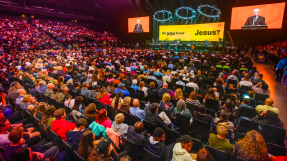
On Thursday evening, several hundred thousand young people took part in the opening ceremony of the Catholic Church's World Youth Day – the reason for the pope's visit – and heard Francis tell them to have the courage to change things.
In a morning address to Panamanian President Juan Carlos Varela and the diplomatic corps, Francis said the continent's young people were demanding that their political leaders live honestly, transparently, simply, and 'be opposed to all forms of corruption'.
Last year, a Transparency International report on corruption in Latin America showed that more than half of people surveyed in 20 countries believed their government was failing to address corruption and one in three said they had to pay a bribe for public services.
Francis praised those in the Latin American Church, who, like assassinated Salvadoran Archbishop Oscar Romero, had tried to keep the truth alive 'in the face of injustice, the spread of poverty, and the abuse of power'.
Romero, a champion of the poor, became a human rights icon in Latin America when he was killed by a right-wing death squad in 1980 while he was saying Mass. He was made a saint last year.
Romero's path to sainthood had stalled under two previous popes, reflecting concerns by some bishops in Latin America and the Vatican that he was overly political. But Francis speeded it up after his election as the first Latin American pope in 2013.
In the past, Francis criticised bishops who spoke badly of Romero even after his assassination, saying they had defamed and slandered him. On Thursday, Francis said Romero's name had become 'a dirty word' for some.
Francis told Reuters in June he had wanted to make a stop in nearby El Salvador during his Panama visit to pray at Romero's tomb. Francis later decided to make a longer trip to El Salvador at some point in the future.