
The future of democracy across the entire African continent hangs on Kenya's ability to halt the horrific violence that has swept across the country after the disputed presidential elections last December, Kenyan church leaders said on Friday.
They warned, however, that deep-rooted ethnic divisions would take a long time to heal and require more than unanimity on the political level.
"Kenya is a test case of whether Africa moves forward in the democratic process," Agnes Abuom, a Kenyan historian and former political detainee from the country's Anglican Church told a news conference in Geneva.
Ms Abuom was in the Swiss city for a 10-day meeting of the World Council of Churches central committee, the highest governing body of the ecumenical council, which began last Wednesday.
More than 1,000 have been killed in ethnic violence in Kenya, formerly a bulwark of democracy and economic stability. Opposition leader, Raila Odinga, a Luo, says the 27 December elections were stolen by President Mwai Kibaki to secure his re-election.
Ethnic violence has boiled over in the western regions in particular, where around 20,000 Kikuyus -Kibaki's tribe - have been driven out by the majority Luos in the past few weeks. Others have been butchered to death by machete-wielding mobs.
Ms Abuom, a former WCC president and campaigner for social justice, added, "What has happened was inevitable."
South African Methodist Bishop Mvume Dandala, head of the Nairobi-based All African Council of Churches, was also in Geneva last week.
"To allow democracy to collapse in Kenya would be to allow it to collapse around the continent," he warned.
Christianity is the dominant religion in Kenya, and the opinions of church leaders are taken seriously by the country's political leaders.
Earlier in the central committee meeting, WCC General Secretary Rev Dr Samuel Kobia told representatives of the body's 348 members that Kenya's breakdown "severely tests the notion of elections as a panacea for democracy and good governance".
He pointed to the reluctance of many government leaders - and bishops - on the African continent to give up power.
"One of the most difficult situations in Africa is change of government. This often produces violence. We don't have the culture or tradition for the change of one regime to another," said Dr Kobia.




-

Edinburgh University ends divinity programmes as theology faces a changing future
-

Why the Archbishop of Canterbury’s award controversy matters
-

More than one in four US Protestant churchgoers believe some biblical truths become outdated
-

Catholicism in France has 'collapsed'
-

Christian leaders issue ‘sober and urgent call’ for Western Church to prepare for disruption
-

Australia's anti-therapy laws harm the most vulnerable - Britain should not copy them
Most Popular
News

Active faith linked to happier marriages and lower divorce rates, study finds
People who regularly attend church are more likely to report happy marriages, according to a new report examining the relationship between faith and family life.

Indian churches fearing anti-conversion laws tell non-Christians: enter at your own risk
Churches in Dhamtari, a town in the central Indian state of Chhattisgarh, have put up notices warning non-Christians that they enter at their own risk, weeks after a law against religious conversion came into force in the state.

£1k bursaries to help churches develop youth and community mentoring programmes
Churches across the UK are being offered bursaries to help them establish mentoring programmes aimed at supporting young people and others in their communities.
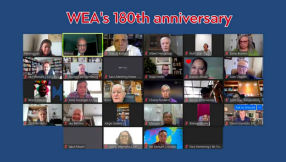
World Evangelical Alliance celebrates 180th anniversary
The World Evangelical Alliance (WEA) has held an online celebration to mark its 180th anniversary. Hundreds of people from more than 22 countries attended, and the event was rebroadcast to accommodate different time zones.








