
Almost two-thirds of parents responding to a survey said their children did not take part in collective worship at school every day, it was revealed.
Secondary schools are far more likely to shun the traditional requirement, which has been compulsory in the state system since the Second World War.
The disclosure – in research commissioned by the BBC – will add weight to growing calls to drop the legislation.
It comes after a delegation of teachers, secularists and religious leaders wrote to Michael Gove, the Education Secretary, last year insisting children should not be “coerced” into religion in schools.
Under the 1944 Education Act, schools must provide “broadly Christian worship” every day. Parents have the right to pull children out of religious assemblies but the power is not extended to pupils themselves.
The latest study – commissioned to coincide with a series of faith-based programmes on BBC local radio – was based on a survey of more than 1,700 people by the research company ComRes.
Some 64 per cent of parents who responded said their children did not attend a daily act of collective worship at school.
Previous studies have found that the majority of primary schools still abide by the law but more than eight in 10 secondaries shun the requirement.
The latest survey found 60 per cent of adults were not in favour of maintaining the law on collective worship, although this dropped to less than half of people aged over 65.
Andrew Hawkins, ComRes chairman, said: “This poll tells a story of declining support for Christian worship in schools, evidenced in three ways.
“Firstly, relatively few parents say their children’s school complies with the law. Secondly, support for the current law is best described as lukewarm.
“Thirdly, the headline figures are driven by a striking age gradient showing younger parents as the most likely to say the law is not enforced and should not be, while older parents are more inclined to say the opposite.
“The key question for the future is whether younger people will become more supportive of collective worship as they age, or whether this marks a generational change and therefore further decline in support over the coming years.”
Keith Porteous Wood, executive director of the National Secular Society, said: “As the BBC survey confirms, the law requiring daily collective worship is being widely flouted, and because the law should not be brought into disrepute in this way, it should be repealed."
Andrew Copson, chief executive of the British Humanist Association, said: "The continuing requirement to hold collective worship is widely opposed.
"Teachers don’t want it, parents don’t want it, pupils don’t want it and it is a violation of young people’s right to freedom of religion or belief.
"The fact that so many schools don’t enforce the law shows that the law, as it stands, is not workable. Its continuing existence actually prevents schools offering better, genuinely inclusive assemblies which would build community and be educationally useful."




-

UN officials demand explanation for Iranian church seizure
-

AI could become a ‘very dangerous master’, warns John Lennox
-
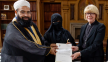
Archbishop of Canterbury withdraws award given to Muslim cleric who praised Bin Laden
-
Calls for Church of England to be 'rooted in scripture' ahead of General Synod elections
-

Most practising Christians are evangelical, study finds
-
Church of England blessing same-sex relationships 'a bridge too far'
Most Popular
News

People view religious education positively, study finds
The government is consulting on plans to add RE to the national curriculum.
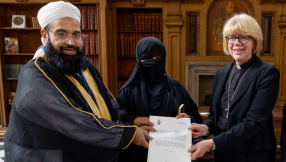
Archbishop of Canterbury withdraws award given to Muslim cleric who praised Bin Laden
Reform leader Nigel Farage said the decision to award Hafiz Muhammad Tahir Mehmood Ashrafi was "astonishing".
How the new General Synod could move beyond the present disagreement over same-sex relationships
How might the next Synod make progress in the next five years based on a recognition that there are those in the Church of England who hold fundamentally opposed positions on the matter? Is there a way of allowing both sides to achieve what they want? Martin Davie argues that the answer to this question is ‘Yes.’
No part of London should become a free speech, gospel exclusion zone
Soho is not exempt from freedom of speech and Christian expression. And Christians do not lose their fundamental freedoms when they cross an invisible boundary into a neighbourhood associated with a different worldview. The streets of London belong to all of us, writes Andrea Williams.








