
Norway's government has taken the unprecedented step this month of cancelling debts owed by five poor countries, humbly stating that the debts were incurred by Norway's own "failed development policies", Jubilee Debt Campaign has reported.
|PIC1|The historical step has been hailed by debt campaigners across the world, who have said that it is the first sign of richer countries accepting responsibility for their part in creating poorer countries' debt crises through reckless and self-interested lending.
The Chair of Jubilee Debt Campaign in Norway, Kjetil G. Abildsnes, has welcomed the move stating that "Norway now cancelling illegitimate debt and admitting co-responsibility for a failed development initiative is simply historic.
"The Norwegian government has shown political courage that won't go unnoticed."
The Policy Co-ordinator at Jubilee Debt Campaign UK, Caroline Pearce said, "Norway's decision has set a new standard in creditor responsibility. Debt campaigners have long argued that not only un-payable but also unjust debts must be cancelled.
"The UK Government must now examine the legitimacy of its outstanding debt claims. It is simply not acceptable for people in poor countries to keep paying off debts incurred through rich countries' negligent, corrupt or politically-motivated lending."
Particularly important in the announcement is that Norway has agreed to cancel "without conditions" debts amounting to US$80m payable by Egypt, Ecuador, Peru, Jamaica and Sierra Leone.
|QUOTE|The debts arose in the 1970's when loans were given out by Norway to prop up its ship-building industry, with little benefit for the borrowing countries.
Debt campaigners around the world have long been calling for cancellation of these kinds of "illegitimate" debts, such as on loans knowingly given to dictators or for useless projects, and for responsible lending practices to avoid such loans in future.
Erik Solheim, Norway's development minister, in announcing the cancellation, explicitly recognised that the debts arose through "a development policy failure" and concluded that, "As a creditor country Norway has a shared responsibility for the debts that followed."
In making the announcement he has set a challenge to other creditor countries, stating that "by cancelling these debts we want to give raise to an international debate on lender responsibility".
Even more significant is that Norway is not counting the cancellation towards its aid spending, the usual practice with debt cancellation. Last year, more than half of the global increase in aid was accounted for by cancellation of Iraq's debts.




-

Edinburgh University ends divinity programmes as theology faces a changing future
-

Why the Archbishop of Canterbury’s award controversy matters
-

More than one in four US Protestant churchgoers believe some biblical truths become outdated
-

Catholicism in France has 'collapsed'
-

Christian leaders issue ‘sober and urgent call’ for Western Church to prepare for disruption
-

Australia's anti-therapy laws harm the most vulnerable - Britain should not copy them
Most Popular
related articles
Kirk told to Keep Pressure on Government over Global Poverty
Kirk told to Keep Pressure on Government over Global Poverty
G8 One Year On - Debt Cancellation Helps in Zambia
G8 One Year On - Debt Cancellation Helps in Zambia
Churches Called to 'Stand Up Against Poverty'
Churches Called to 'Stand Up Against Poverty'
Jubilee Debt Campaign Calls for World Bank to Take Action Against Poverty
Jubilee Debt Campaign Calls for World Bank to Take Action Against Poverty
Jubilee Debt Campaign Tells World Bank, IMF to Cut Strings on Debt Relief
Jubilee Debt Campaign Tells World Bank, IMF to Cut Strings on Debt Relief
News

Active faith linked to happier marriages and lower divorce rates, study finds
People who regularly attend church are more likely to report happy marriages, according to a new report examining the relationship between faith and family life.
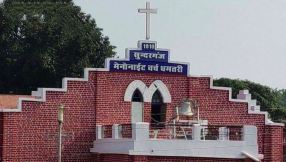
Indian churches fearing anti-conversion laws tell non-Christians: enter at your own risk
Churches in Dhamtari, a town in the central Indian state of Chhattisgarh, have put up notices warning non-Christians that they enter at their own risk, weeks after a law against religious conversion came into force in the state.

£1k bursaries to help churches develop youth and community mentoring programmes
Churches across the UK are being offered bursaries to help them establish mentoring programmes aimed at supporting young people and others in their communities.

World Evangelical Alliance celebrates 180th anniversary
The World Evangelical Alliance (WEA) has held an online celebration to mark its 180th anniversary. Hundreds of people from more than 22 countries attended, and the event was rebroadcast to accommodate different time zones.








