Christians living in countries where persecution is prevalent are coming under a new threat because of conspiracy theories blaming them for the spread of Covid-19.
Open Doors, an organisation supporting persecuted Christians worldwide, said it had received "distressing" reports from partners in the field of Christians being blamed for the pandemic.
In Somalia, Islamist terrorist group al-Shabaab has said that coronavirus is being spread "by the crusader forces who have invaded the country and the disbelieving countries that support them".
As Islamic militants in the country pedal the false claim that coronavirus cannot be contracted by true Muslims, action is being taken to counter the misinformation, with teachers and mosque leaders being told to use loudspeakers to spread the word on how to prevent the spread of Covid-19.
Imams are also being encouraged to speak about the importance of social distancing and the Islamic emphasis on cleanliness.
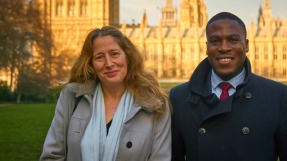
Ron Boyd-MacMillan, Open Doors' Head of Strategic Research, said that in the face of conspiracy theories targeting Christians and other religious minorities, faith and community leaders have a crucial role to play in sharing accurate information about the virus.
"It will take the leaders of all religions and of none to come together in the best ethics of their traditions," he said.
"They will strengthen their societies by exposing falsehoods and increasing co-operation."
It is not only in Somalia that Christians have been on the receiving end of coronavirus conspiracy theories.
In Yumbe, northern Uganda, radicalised Muslims have also blamed Christians for the pandemic, with some claiming that Allah is punishing mankind because Christians in China supposedly burned the Koran.
In Russia, Open Doors says a state TV station falsely reported that an evangelical church in St Petersburg had been behind a cluster of infections because it had apparently continued to meet after the lockdown. The report sparked an attempted retaliatory arson attack on another evangelical church.
Boyd-MacMillan said that the conspiracy theories could be a political ploy.
"Ever since a plague that ravaged the Roman empire in 180 AD, Christians have been unfairly blamed for natural disasters like these with a rise in persecution," he said.
"Sometimes the scapegoating is a political ploy – to distract from government mishandling of the crisis; sometimes a cynical ploy by existing persecutors to deal a death blow to a community they hate.
"Covid-19 is enough of a crisis without seeking to weaken society further in this way."
Open Doors spokesperson Jo Newhouse added: "It's distressing to hear of the blaming of Christians for the Covid-19 pandemic in places where the Body of Christ is already under immense pressure.
"We call on the government to do all in its power to counter the spreading of misinformation and to make sure that all minorities are adequately protected against violence, especially in remote areas."