A landmark case is before the US Supreme Court today. In fact these tend to come along fairly regularly, but this one actually deserves its appellation.
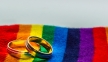
Jack Phillips, a Christian baker and owner of Masterpiece Cakeshop, refused to bake a cake for a gay couple for their wedding. That was five years ago and inevitably there were consequences. He has fought the case all the way to America's top court, and he's paid a price – not just financially, but as he wrote on USA Today yesterday, with 'hate mail, obscene calls and death threats' as well. Accounts of what he and his family have been through are very moving.
It's a sad story, whatever the result – not least because it's arguably the wrong battle to fight in the first place.
Phillips is adamant that he's a tolerant person: 'I'm happy to sell a cake to anyone, whatever his or her sexual identity. People should be free to make their own moral choices. I don't have to agree with them.' But, he says, this tolerance needs to be a two-way street: 'What a cake celebrating this event would communicate was a message that contradicts my deepest religious convictions, and as an artist, that's just not something I'm able to do, so I politely declined.'
So far, he's lost all the way along the line. The Supreme Court will decide whether those lower courts were right.
Phillips' case – which has won him support both from conservative Christians and religious liberty campaigners across the spectrum – has echoes in other cases both in the US and the UK, notably Ashers bakery in Belfast. In that instance, even veteran LGBT campaigner Peter Tatchell came out in their support when they were found guilty of discrimination for refusing to bake a cake with a slogan urging support for gay marriage. It's about free speech, he said. Criminalise one expression of it, you can criminalise others too.
No fair-minded person – and both Phillips and Ashers' owners the McArthur family have met plenty that aren't – could fail to sympathise with them or to acknowledge that they have a large amount of right on their side.
But here's the thing: there's right on the other side too.
There is much about today's super-sensitive society, where an unwise word or slightly off-centre opinion can see someone forever shamed in a career-ending Twitter storm, that I don't admire. I don't agree with attempts in universities to ban speakers with objectionable opinions. I don't agree that people have the right not to be offended. And I tend to think that people who say they are 'traumatised' by encountering prejudice or discrimination should get out more. This is, after all, a First World problem: in Uganda, gay people are lynched.
But still: I believe the last couple of decades have seen moral and civil advances for LGBT people in wider society. They shouldn't be treated differently in any way because of their sexuality. Where necessary, the law should mandate that.
Now, it's often said that what is at stake is a clash of rights, and to a degree, that's right. Jack Phillips has a right to freely exercise his religion. Gay people have a right not to face discrimination. As it's currently framed for the Supreme Court, the question is which trumps the other. There will be a winner and there will be a loser.
Personally, as a Christian, I fear the prospect of a win for Phillips more than I fear a loss. I don't think he's a nasty homophobe at all. But I think a lot of people are, and a win in the Supreme Court will cut them loose to turn on gay people. Christians – and evangelical Christians in particular – are associated with opposition to homosexuality, and they're going to be guilty by that association. A win for Phillips might well be a defeat for the gospel.
But more than this, I regret most deeply the fact that these cases have gone to court at all. I wonder if anyone stopped to think whether it was actually the right thing to do? What about Jesus, who 'did not consider equality with God something to be grasped' (Philippians 2:6) – in other words, set aside his rights to the extent of being crucified? What does the relentless opposition to any demonstration of grace toward gay people say about Christian love? What is there about these cases that commends Christ to those who don't know him? Whoever imagined that bringing the lawyers in was a smart evangelistic strategy? What is the game these organisations – because the individuals concerned are just the point men for large and well-funded armies of activists – are playing?
It's too late now, for cakeshops on both sides of the Atlantic: it's win or lose. But Jesus seemed to model a different way. If someone hits you on the right cheek – a backhander, an insult – offer the other as well. If someone sues you for your tunic, shame them by giving them your cloak too. If a Roman soldier compels you to carry a load for the statutory mile, get him into a world of trouble by generously carrying it for two.
These are tactics for resistance in a hostile world, and they're better than what's being fought out in the courts.
I admire Jack Phillips' courage hugely. But I don't admire the confrontational, us and them, conflict narrative he's been sold. Win or lose, I think the Church loses this one.
Mark Woods is the author of Does the Bible really say that? Challenging our assumptions in the light of Scripture (Lion, £8.99). Follow him on Twitter:@RevMarkWoods