
Tensions grew Wednesday when Christian groups in Korea protested against the government as they called for a revision to the private school law enacted in July, which they claim has reduced their mission schools' autonomy.
Several members of the Christian Council of Korea (CCK) shaved their heads during a news conference to demonstrate the seriousness of their demands, as they threatened to shut down their schools if the law isn't rewritten.
However, Christian leaders' opinions are divided over the controversial law. Progressive Christian groups, such as the Presbyterian Church in the Republic of Korea (PCRK) and Catholic Priests' Association for Justice (CPAJ), have been staunch supporters of the private school law, which they say will help improve transparency in the management of school funds.
The law mandates that private schools fill one-fourth of the seats of their school foundation boards with people recommended by a committee of teachers, parents, alumni and community leaders. Previously, school directors were mostly handpicked by school owners or by the foundations.
The law also bans family members or relatives of school owners
from becoming board members.
The PCRK and CPAJ joined four other religious organisations, including the Buddhist group Lotus World, in a news conference in Seoul yesterday in support of the private school law.
They claim that the CCK and its allies - such as the Presbyterian Church of Korea (PCK), the largest Christian group in the country, representing more than 7,000 churches - are preoccupied with their own self-interest.
"It is regrettable that some Christian groups are opposing the private school law and even threatening to close the schools at a time when most of the public is backing the new regulations in the hopes of reform,'' said Kim Jong-myung, a director at PCRK.
"We agree that the private school law needs changes in some provisions, but in the big picture, we see it as a step in the right direction. The fact that some groups are reverting to extreme gestures such as shaving their heads and threatening lawmakers and the public just to serve their particularistic interests is pathetic,'' he said.
About 70 per cent of Korea's private schools are operated by religious organisations. The CCK represents 73 secondary schools around the nation, and the PCRK represents 77 schools.
Many of the groups opposed to the law are concerned that allowing outsiders to join the school foundation boards will hurt their influence over their schools. The private school law was passed by the National Assembly in December last year amid fierce resistance from conservative religious groups and the main opposition Grand National Party (GNP).




-

More than one in four US Protestant churchgoers believe some biblical truths become outdated
-

Wycliffe celebrates ‘remarkable moment’ as Bible translation advances at rapid pace
-

Could the Church face a ‘silver uprising’?
-

Christian leaders issue ‘sober and urgent call’ for Western Church to prepare for disruption
-

Church in Wales pauses plans to allow gay marriage
-

Christian social worker returns to Court of Appeal in dispute over withdrawn job offer
Most Popular
related articles
Future UN Head Holds Talks with China on North Korea
Future UN Head Holds Talks with China on North Korea
Life in North Korea: Interview with Concentration Camp Survivor
Life in North Korea: Interview with Concentration Camp Survivor
North Korea Refuses to Halt Nuclear Programme
North Korea Refuses to Halt Nuclear Programme
News
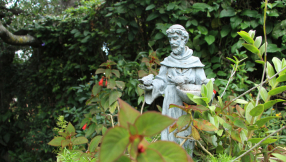
800 years on: Why St Francis of Assisi still captivates the world
4 October is St Francis’s Day, when Christians around the world remember the life and witness of Francis of Assisi. This year’s observance has particular significance, marking the 800th anniversary of his death. This is the story …

Majority back Ireland’s three-day abortion waiting period, poll finds
A new poll has found majority support for retaining Ireland’s mandatory three-day waiting period before an abortion, as lawmakers continue to consider legislation that would remove the requirement.
ONS figures show 'good' outlook for married couples
The Coalition for Marriage (CFM) has welcomed new figures suggesting that married couples are increasingly staying together.
Christians condemn sexual violence following UN report on Russia-Ukraine conflict
Most cases of sexual violence documented were against male prisoners of war.








