Jews welcome new egalitarian prayer space at Jerusalem's Western Wall

Liberal Jews in Britain have welcomed the decision in Israel to establish an "egalitarian" prayer space at the Western Wall in Jerusalem, the most holy site in the Jewish religion.

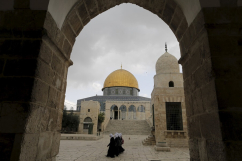
After a year-long debate, the Israel cabinet voted to establish a section of the Western Wall, originally a wall of King Solomon's Temple in Jerusalem, for mixed prayers. The Western Wall, known in Hebrew as the Kotel and widely regarded as Judaism's most holy site, has until now been strictly segregated with just a small space set aside for women.

The cabinet also voted through an upgrade of the Southern Wall section, also known as Robinson's Arch, and to anchor the agreement in law. The decision was hailed as an historic landmark for Jewish pluralism and non-Orthodox movements in Israel.

According to the proposed agreement, a new prayer area will be set up along the wall south of the current prayer area.

This section will be officially registered in Israel's Law of Holy Sites and will be accessed from the main public plaza. Visitors will now be able to decide whether they want to go to the gender-segregated Orthodox section, or to the section where men and women can pray together in the spirit of Progressive Judaism, as represented in the UK by Liberal Judaism and the Movement for Reform Judaism. The Orthodox tradition is represented in the UK by the United Synagogue and other ultra-Orthodox bodies.

Rabbi Danny Rich, chief executive of Liberal Judaism, said: "This is a landmark decision for Jews throughout the globe. It recognises that Judaism is an inclusive religion with a variety of different but valid expressions.

"Equality of gender, ethnicity and sexual orientation are central to Liberal Judaism and now at last progressive Jews can celebrate Judaism in keeping with the modern world at our most holy site."

The group Women of the Wall, which has for nearly three decades campaigned for equal praying rights, welcomed the decision. 

Women of the Wall spokeswoman Shira Pruce said the decision was a "revolution for women and Jewish pluralism in Israel". She added: "By approving this plan, the state acknowledges women's full equality and autonomy at the Kotel and the imperative of freedom of choice in Judaism in Israel."

However the Grand Mufti of Jerusalem, Sheikh Muhammad Hussein, condemned the ruling which affects what Muslims regard as Islamic property.

Hussien said the Western Wall is "the property of the Islamic waqf that was taken by the Israeli occupation in 1967."

He described the decision is "a brutal attack on the waqf and additional evidence of the Israeli aggression against Muslim holy places, in an attempt to Judaize Jerusalem."


related articles
Jerusalem: Violent clashes at contested holy site

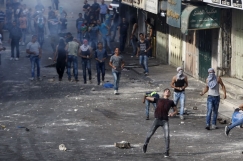
Police fired tear gas and rubber bullets at a group of Palestinian youths on Sunday as clashes broke out at the contested al-Aqsa mosque plaza in Jerusalem.

Israeli police clash with Palestinians across West Bank

Fighting between Israeli police and Palestinians has broken out across the West Bank, including East Jerusalem, as a result of ongoing tensions at Temple Mount.

US journalist asks fiery Muslim cleric: Why can\'t Jews pray at Temple Mount?
US journalist asks fiery Muslim cleric: Why can't Jews pray at Temple Mount?

A Muslim cleric apparently accused of playing a central role in instigating the current Palestinian "wave of terror" in Israel, has been challenged to explain why Jewish people cannot pray at the holiest site, the Temple Mount.

Christians and Jews are partners, not enemies, say Orthodox rabbis

The document is claimed to signal a new departure in relations between the two faiths.

Why is the idea of women worshiping at the Western Wall significant?

The Israeli government is about to vote on whether to allow men and women to pray together at the Western Wall. What's the significance?

News
Faith in difficult times: lessons from 1930s Britain

Architectural historian Steven Brindle talks to Christian Today about the faith that shaped 1930s Britain, the churches that supported struggling communities and what lessons the decade might have for us today.

Campaign aims to mobilise 500,000 Christians for Christmas outreach

Shine Your Light is aiming to mobilise half a million Christians to share the gospel with five million people across the UK this Christmas, with more than 2,000 churches already signed up, organisers say.

The Church of England should repent for previous calls to ban 'conversion therapy'

The Church of England's uneasiness about the government's ‘conversion practices’ bill is a perfect lesson in the old adage, 'be careful what you wish for,' writes Dr Martin Davie.

Leaked Home Office report links 'Christian extremism' to traditionalist beliefs and immigration concerns

An internal Home Office report lists concerns about immigration, multiculturalism and changing social values among the characteristics associated with what it calls "Christian extremism", it has been reported.