Too much religious influence in Remembrance Day ceremonies means people are in danger of "switching off" and forgetting what is being commemorated, historian Dan Snow has argued.
In a comment piece for the Guardian, Snow says the presence of religious figures and the lack of secular representation at the Cenotaph on November 11 does not reflect the "changing times" of Britain.
"This important ceremony is diminished by the dominance of a religion that fewer and fewer people follow," Snow writes.
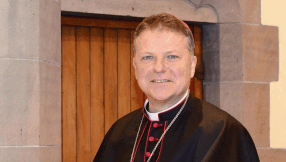
"We live in a country where about half the population say they have no religion. Fewer of us than ever are active believers in the Christianity of the Church of England. There is a great danger that by letting a bishop dominate and refusing to admit a secular presence at the ceremony it will be diminished or even ignored by modern Britons."
Snow says that the Cenotaph, situated on Whitehall in London, was designed as a secular memorial by Edwin Lutyens to reflect the wide range of beliefs and nationalities of those who died in the First World War. It bears no religious inscriptions or symbols, and was unveiled at its dedication in 1919 without any Christian ritual.
"The Cenotaph is a state monument. It is not a religious one. About 26,000 serving members of the armed forces today describe themselves as having no religion, which makes the non-religious the second-largest belief group (after Christianity)," he says.
"We cannot continue to exclude a representative of these serving men and women, not to mention the tens of thousands of people of no religion who served in the world wars...Remembrance is one of our most important duties as citizens. The act itself must reflect changing times.
"The event at the Cenotaph every November must feel as relevant and profound today as it was when it was first conceived," he concludes. "It must reflect the society it serves. If people switch off, they will forget. And when we forget, we repeat."
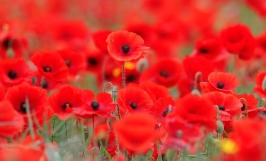
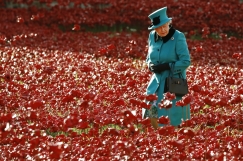
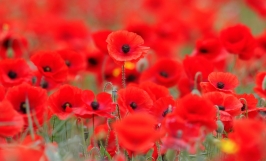
Snow's comments follow a wave of controversy regarding the red poppies worn to commemorate the sacrifices of those who died serving in WW1.
Some argue that the poppy serves to glorify war, while others contend that it has been used as a tool by politicians to justify continued military action.
RAF veteran Harry Leslie Smith has been outspoken on the issue, insisting that the poppies have become an "affirmation" of war. He has also argued that rather than focussing on past failures, Remembrance Sunday serves to define "all wars as just and all death as patriotic rather than a waste".
I am against wearing of the poppy b/c it has been co-opted by politicians to justified our present wars on terror that are eroding democracy
— Harry Leslie Smith (@Harryslaststand) November 2, 2014 " data-caption="null" data-credit="null">How can you commemorate the callous waste & savagery of the Great War if you don't mention that the soldiers died for nothing #TowerPoppies
— Harry Leslie Smith (@Harryslaststand) November 3, 2014 " data-caption="null" data-credit="null">Some people are now choosing to wear a white poppy instead, as a symbol of peace.