A number of militants in Nigeria's Boko Haram are Christians, a country expert has claimed.
In an interview with Radio France Internationale, Dr Murray Last, who currently lectures in anthropology at UCL, said there are "plenty of Christians who are part of Boko Haram because it's a job."
Estimates vary as to the true number of Boko Haram militants, though it's believed to be at least 5,000. "The problem is that of course as far as we know it's quite a good job. At one point you could be paid 400 dollars a month for just simply joining them, you wouldn't have to go fighting, you would spend your first months doing logistics or training," Last explained.
"It's quite profitable joining Boko Haram because you not only loot places, but you share the loot out at the end."
Last confirmed his belief in an email to Christian Today. "Yes, I did mean to say that some of those involved with Boko haram are (said to be) Christian," he said.
"Among those saying so are (a) local Christian men with kinsmen supposedly in Boko Haram; (b) local journalists who report that some BH [Boko Haram militants] taken prisoner by the Nigerian army turned out to be Christians from the south of Nigeria."
According to Last, some of those trading with Boko Haram are from non-Muslim parts of Nigeria, and the militant group "can attract all sorts, including those needing a job or a profit; and they can come from anywhere in Nigeria as well as from outside".
He says we won't ever know for certain, though, because if or when Nigeria manages to regain stability and wipe out Boko Haram, those involved with the group will distance themselves from it. Last did add, however, that he has spoken to young Christians in northern Nigeria who showed support for the Islamists.
"In short, we need to be more nuanced in our analyses!" he said. "But I have no doubt that the leadership of [Boko Haram] and its formal ideologies are Muslim, not Christian."
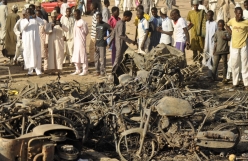
Boko Haram has murdered thousands since its uprising in 2009, in addition to abducting hundreds of women and girls. Last April, militants kidnapped more than 250 girls from a school in Chibok in Borno state. Those who have managed to escape have told stories of forced conversion to Islam, abuse, rape and forced marriage. Young boys have also been taken and forced to join the fighting, and children as young as ten have been used as suicide bombers.
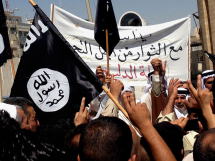
Boko Haram loosely translates as 'Western education is forbidden' and its leader, Abubakar Shekau, has declared intent to cleanse the country of Christians, eradicate Nigerian democracy, and replace it with an Islamic state guided by Sharia law.
Boko Haram pledged allegiance to Islamic State in Iraq and Syria earlier this year.