When we say the word "hack," the first thing that usually comes to mind is computers.
But now the use of the word is not limited anymore to the manipulation of computer codes. Scientists have actually been trying to hack the human brain for various purposes, from offering new healthcare services to providing new ways to control technological devices.
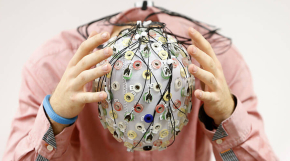
During the recent Consumer Electronics Show (CES) in Las Vegas, the Boston-based start-up company BrainCo unveiled the so-called "mind control" headband.
Developed by scientists from Harvard and the Massachusetts Institute of Technology, the device claims to be able to translate brainwaves into electric signals.
In a report on Newsmax, BrainCo representative Zenchuan Lei said the "mind control" headband's technology can be tapped for several uses, including helping people with disabilities who use prosthetic hands.
This means that the device has the potential to make life easier for those with paralysis and missing limbs.
"These signals can be used to control objects like a prosthetic hand," Lei told NewsMax. "You can turn the lights on or off just by focusing on that."
This promising new device employs what its developers call "neuro feedback," which allows users to control their brainwaves for purposes—effectively similar to hacking the brain.
Lei further suggested that the high-tech headband could also be used to help patients with attention deficit hyperactivity disorder.
"It teaches you to enhance your focus and concentration," Lei explained.
The "mind control" headband is expected to be available in the market later this year, for a price of less than $150.
Also in the CES, South Korean startup Looxid Labs presented an impressive new headset that is able to track both brainwaves and eye movements, thereby providing more accurate insights into the mind.
The headset, when attached to a computer, can scroll application by just using eye movement, and can click items by just blinking.
"No other device that I'm aware of combines these things," Looxid chief business officer Alex Chang said, as quoted by NewsMax.