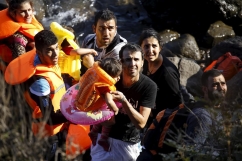
German officials have disclosed that about a third of refugees arriving in Germany who claimed to be Syrians are actually not Syrians.
Interior Minister Thomas de Maiziere said the passports and the languages of the refugees led to this finding.
"We are seeing forged Syrian passports. There are people who claim to come from Syria but don't speak a word of Arabic," De Maiziere said, according to Fox News.
But De Maiziera clarified that the non-Syrian refugees, whom he said represent 30 percent, of the migrants, could still qualify for asylum.
"They just have to be truthful about their identity and patiently wait while their request is processed," he said.
Tobias Plate, spokesman of the German ministry, said there are no precise statistics yet available, but said the development had forced Germany's 16 state governors to agree on measures designed to streamline the country's handling of refugee arrivals.
Among the new measures adopted are declaring three Balkan countries—Albania, Kosovo and Montenegro—"safe" states of origin and cutting some cash payments to newcomers, Aljazeera said.
Plate said these are part of efforts to reduce the stream of people who have arrived from those countries.
The agreement also states that people at the initial reception centres will be given benefits in kind instead of pocket money, he said.
Germany will also temporarily refrain from sending Syrians back to other European Union countries they have traveled through, as would normally be possible under EU rules.
This has been interpreted by some of those seeking refuge from poverty, persecution and war as "a sign that Germany gives special preference to people from Syria, according to Plate.
Syrians make up the most number of asylum seekers arriving in Germany, the report said.