Cardinal Vincent Nichols, Pastor Agu Irukwu and RT Kendall walk into a bar. Well, not a bar so much as a tent. And they didn't walk so much as they were mentioned. But still, those are three names representing three church traditions that haven't tended to have a lot to do with each other over the years...
So what is it that causes the head of the Roman Catholic Church in England and Wales, the pastor of one of London's most significant Black Majority Churches and the renowned reformed Bible teacher to appear alongside each other? The answer is Justin Welby.
The Archbishop of Canterbury mentioned all three (and many more of his friends, colleagues and heroes) during his address to the Focus conference last week. Focus is a gathering of churches linked to Holy Trinity, Brompton, the CofE church which founded the Alpha course, has planted scores of other congregations and was the home church of Welby and his wife Caroline before he was ordained.
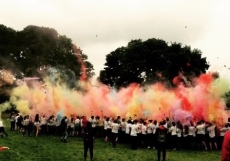
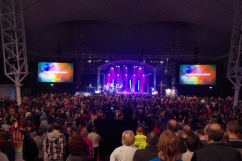
With 7,500 people gathered in Camber Sands, near Rye in East Sussex, the festival began life in 1992 as HTB's week away but has now become part of the 'circuit' of evangelical events that includes Spring Harvest, New Wine, Soul Survivor and many others.
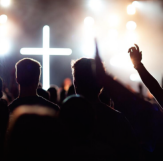
In many ways Focus is indistinguishable from those festivals. A large 'big top' with loud worship music followed by a series of big name speakers and 'ministry time.' But in other ways, it's an entirely different kettle of fish. It attracts a wider range of speakers than may be expected. There are surely no other events in the world that would attract the full Pentecostal zeal of Heidi Baker, the episcopal elocution of the Bishop of London, Rt Rev Richard Chartres and the plain speaking dynamism of author Jo Saxton. That's before we even get to the moment when a pretty major British TV star was up on the stage talking about being prayed for by a group of 12-year-olds (Bear Grylls looked as comfortable on the stage as he does in a remote jungle).
The event's links to HTB mean that it really does feel like a massive church away trip, and that a lot of people know each other from way back. Of course this can be a double-edged sword. For everyone that greets an old friend from decades ago, there'll be someone else who's new to the scene and wondering if they fit. But this isn't anyone's fault, and a specific request from HTB's vicar Nicky Gumbel at the outset of the festival to make sure we all looked out for those who seemed lonely or vulnerable was well-judged.
A big strength of the programme is the use of the staff of St Mellitus College to host one stream of seminars. In this case the theme was fascinating – heresy. Each day we were taken through an ancient heresy (Pelagianism, Gnosticism, Arianism etc) and then asked to consider how this might show itself in today's Church. The most memorable application of this was during the Gnosticism session when Dr Sara Schumacher spoke about the importance of 'embodiedness' in a world of social media (and indeed a world in which she keeps in touch with her parents across the Pond via Skype).
The atmosphere at Focus is another of its plus points. Everything is fairly relaxed so no-one bats an eyelid at someone being prayed for in the middle of the campsite, children safely roam around without too much supervision and everyone is very polite (friendly even!) in queues.
So is Focus a taste of the Kingdom of Heaven? Yes, but there are still things which could be improved. Although there were two main stage speakers who were women, the speakers, worship leaders and other high-profile characters on site remain overwhelmingly white, middle-class and male. This is clearly something being addressed (by an excellent and feisty seminar "Is Jesus a Feminist?") but change needs to happen faster, to my mind. In addition, although the friendly atmosphere is wonderful, I wonder if the whole event wouldn't benefit from a bit more diversity in terms of punters as well as speakers. This may well happen naturally, as the HTB network begins to rekindle churches in more deprived areas (as has happened in my own parish).
And it's that momentum towards church planting which proved to be the highlight of the week. Hearing the Bishops of London, Birmingham and Chichester speaking warmly about the small groups of committed Christians who have helped to revitalise churches in their Dioceses was profoundly moving. Hundreds now attend churches that were down to single figures. Struggling churches are being revived by the Holy Spirit (and a lot of effort and time from clergy and congregations) flying in the face of the secularisation thesis.
Oh and it rained torrentially for a couple of days. But no-one remembers that now we're all home and dry.