
While experiential Christianity is a valuable form of testimony, the experience is largely personal and unique and does little when trying to give a defense of the faith, says apologist Dinesh D'Souza.
D'Souza was invited to address thousands at Harvest Christian Fellowship in Riverside, California, to share the "what" of evangelism. Senior Pastor Greg Laurie is leading the megachurch in a series of messages on sharing one's faith in preparation for the annual Harvest Crusade in Southern California in August.
Just a week before D'Souza's appearance, Laurie stressed to his congregation that God can use everyone to preach the Gospel. God even used "a knucklehead like me", he said, as he recalled his teen years when he had become a new believer and was still able to bring a middle-aged woman to faith in Jesus Christ.
The Harvest congregation was introduced to apologetics over the weekend to address some of the difficult questions Christians come across when evangelising.
Apologetics refers to using reason to give a defense of the faith.
"Using reason means not using revelation, not using an appeal to the Bible and in some ways ... not just appealing to your own experience," Dinesh explained.
Apologetics is different in every generation, he noted. While apologists such as C S Lewis had to deal with questions raised in the aftermath of World War II and the Holocaust, the world today is very different, and so are the questions.
"There's always a need for a new breed of young Christian defenders who are able to respond to the challenges of their own time and stand up for the faith," said D'Souza, who most recently authored Life After Death: The Evidence.
Addressing a common atheist argument that Christians have blind faith and leave their brains behind when it comes to belief in God, D'Souza told the Harvest congregation that not all answers can be fully resolved by reason. There are questions where you can never get a full answer no matter how much you apply reason, he said.
Before marrying, he tried to approach the issue of marriage with reason, pondering what life would be like with his future wife over the next 50 years. No matter how much he pondered, he would never really know, he realised. Even if he decided to try to get to know her more for a few more years, he still ultimately would not have all the information and be able to predict what married life would be like.
"You can't really wait for the data to come in. So in life, at some point, you got to go for it," he said. "You've got to make a decision even in the absence of full information."
"Faith is not unreasonable," he added. "It is the reasonable step, having plugged in reasons but now recognising that reason cannot take you all the way."
D'Souza has debated leading atheists including Christopher Hitchens, whom he has known for 20 years, and Daniel Dennett. Hitchens was recently diagnosed with cancer of the esophagus and will undergo chemotherapy.
"Hitchens is probably thinking about Pascal's Wager right around now," the apologist said, citing the French philosopher's suggestion to bet on God's existence rather than against it. "And there are people praying for him."
On an interesting note, D'Souza noted that atheists and nonbelievers are "closer to the Christian" than those who are indifferent. The opposite of belief is indifference, not unbelief, he said.
"It's much harder for me to get through to some guy who doesn't care than to someone who goes 'there is no God'," he said.
The nonbeliever is engaged in the issue and sees the importance of it. "Hitchens knows it matters a lot," he noted. "If there is a God, it changes everything. So he knows the stakes are very high."




-

More than one in four US Protestant churchgoers believe some biblical truths become outdated
-

Wycliffe celebrates ‘remarkable moment’ as Bible translation advances at rapid pace
-

Could the Church face a ‘silver uprising’?
-

Christian leaders issue ‘sober and urgent call’ for Western Church to prepare for disruption
-

Church in Wales pauses plans to allow gay marriage
-

500 million Christians worldwide face Bible access restrictions, report finds
Most Popular
News
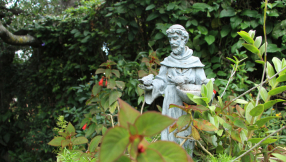
800 years on: Why St Francis of Assisi still captivates the world
4 October is St Francis’s Day, when Christians around the world remember the life and witness of Francis of Assisi. This year’s observance has particular significance, marking the 800th anniversary of his death. This is the story …

Majority back Ireland’s three-day abortion waiting period, poll finds
A new poll has found majority support for retaining Ireland’s mandatory three-day waiting period before an abortion, as lawmakers continue to consider legislation that would remove the requirement.

ONS figures show 'good' outlook for married couples
The Coalition for Marriage (CFM) has welcomed new figures suggesting that married couples are increasingly staying together.
Christians condemn sexual violence following UN report on Russia-Ukraine conflict
Most cases of sexual violence documented were against male prisoners of war.








