
World Council of Churches (WCC) executive committee has stressed the need for churches to be vigilant against nuclear proliferation in a statement adopted at its recent meeting in Bossey, near Geneva.
The WCC governing body reaffirmed "the churches' consistent call for the abolition of nuclear weapons", which today is "more urgent than ever" as control mechanisms like the Nuclear Non-Proliferation Treaty (NPT) are being put under pressure by recent global political and military developments.
Among those developments, the statement pinpoints North Korea's nuclear weapon and ballistic missile tests; Iran's "failure to assure the international community that its civilian nuclear programmes are not camouflaging its intention to develop nuclear weapons capability"; Israel's refusal to subject all of its nuclear facilities to inspection by the International Atomic Energy Agency (IAEA); the "unilateral initiative" by the United States to accept India as a nuclear weapon state; and the "ongoing nuclear modernisation programmes of the nuclear weapon states" - namely the US, UK, France, Russia and China.
The statement also mentions the dangers of "unintended or unauthorised use of nuclear weapons" as a result of "insufficiently secured weapons or weapons materials [falling] into the hands of non-state groups committed to acts of terror".
The WCC governing body has encouraged member churches to continue communicating "an ethical and theological perspective on nuclear arms to their governments" in order to pursue the goals of "complete rejection of nuclear weapons" and of the "claims of [nuclear] deterrence".
According to the WCC executive committee, churches should "engage with other faith communities in exploring ways of working together" towards those goals. This is particularly the case in the Middle East, where a nuclear-weapon-free zone should be established, the committee says.
An "intensified and concerted church action" is crucial since "the nuclear proliferation challenges now facing the world can be effectively met if there is political will and moral fortitude", the committee said.
The WCC governing body statement includes a number of specific country-related appeals. Churches in the US and China are called to "persuade their governments to end their disagreement on a programme of work and resolve the stalemate" at the 2007 session of the Conference on Disarmament.
Churches in South Africa, Sri Lanka, Spain, Sweden, Switzerland and Syria are called to "encourage their presidencies" at the above-mentioned conference in order to achieve urgently needed progress on "a fissile material cut-off treaty, negative security assurances, nuclear disarmament and the prevention of an arms race in outer space".
While commending the churches in the United Kingdom "for their efforts to stop the replacement of the UK's Trident nuclear weapons system", the statement urges the UK Government "to set an historic example of leadership for the whole international community [...] by fulfilling its disarmament obligations under the NPT".
The WCC executive committee has committed itself to "support such initiatives as the New Agenda Coalition of Brazil, South Africa, Egypt, Ireland, Mexico, New Zealand and Sweden and the Middle Powers Initiative of international non-governmental organisations to press for the fulfilment of the NPT disarmament obligations".




-

Edinburgh University ends divinity programmes as theology faces a changing future
-

Why the Archbishop of Canterbury’s award controversy matters
-

More than one in four US Protestant churchgoers believe some biblical truths become outdated
-

Catholicism in France has 'collapsed'
-

Christian leaders issue ‘sober and urgent call’ for Western Church to prepare for disruption
-

Australia's anti-therapy laws harm the most vulnerable - Britain should not copy them
Most Popular
related articles
Archbishop Questions Morality of Trident
Archbishop Questions Morality of Trident
Iran Pulls Christianity into Nuclear Response
Iran Pulls Christianity into Nuclear Response
Christian Human Rights Experts Split on N. Korea Nuclear Pact
Christian Human Rights Experts Split on N. Korea Nuclear Pact
WCC General Secretary Welcomes North Korea Nuclear Deal
WCC General Secretary Welcomes North Korea Nuclear Deal
News

Active faith linked to happier marriages and lower divorce rates, study finds
People who regularly attend church are more likely to report happy marriages, according to a new report examining the relationship between faith and family life.
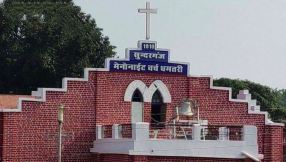
Indian churches fearing anti-conversion laws tell non-Christians: enter at your own risk
Churches in Dhamtari, a town in the central Indian state of Chhattisgarh, have put up notices warning non-Christians that they enter at their own risk, weeks after a law against religious conversion came into force in the state.

£1k bursaries to help churches develop youth and community mentoring programmes
Churches across the UK are being offered bursaries to help them establish mentoring programmes aimed at supporting young people and others in their communities.
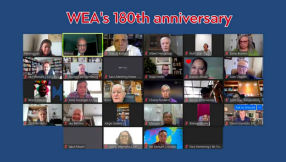
World Evangelical Alliance celebrates 180th anniversary
The World Evangelical Alliance (WEA) has held an online celebration to mark its 180th anniversary. Hundreds of people from more than 22 countries attended, and the event was rebroadcast to accommodate different time zones.








