
An international ecumenical team that visited Honduras has encouraged the churches there to “accompany the people in their search for peace with justice and the re-establishment of democracy”.
In the wake of the military coup in Honduras, ‘Living Letters’ a four-member team on behalf of the World Council of Churches (WCC) and the Latin American Council of Churches (CLAI) visited the country 2-7 August to listen, learn, pray for peace and share approaches to overcoming violence. The team stressed the need for “Christian voices be heard […] in defence of human rights and in support of humanitarian actions”.
They said “this is urgent since violence has intensified with the passage of days” following the June 2009 coup that replaced the elected president by an interim government.
In their message to the churches of Honduras, the team called for the end of “repression, arrests, forced disappearances and violence directed against the population and especially against women”.
According to the Living Letters team, the Honduran people “do not accept the imposition of a de facto government”. The team therefore called for “the re-establishment of the constitutional order as soon as possible”, and stated that “the return of President [Manuel] Zelaya” would open the way to hold “free and legal elections […] within the framework of the constitution”.
On 28 June President Manuel Zelaya was forced to exile by a military coup. Roberto Micheletti, the speaker of Congress and second in line to the presidency, was sworn in as interim leader by the military. The coup took place in the context of a power struggle over President Zelaya’s plans for constitutional change, which had been rejected by the Supreme Court and the Congress.
International condemnation has been near-unanimous. The Organisation of American States (OAS) demanded the immediate reinstatement of the ousted president and suspended Honduras from the group as the interim government failed to allow Zelaya’s return. The United States has since suspended aid to Honduras.
Earlier, Christian emergency relief agency ACT International said several thousands Hondurans in the department of El Paraíso at the border region to Nicaragua are facing an emergency situation after the Honduran authorities prolonged a curfew and called for the restoration of democracy.
An OAS delegation is expected to visit Honduras for mediation talks on Tuesday.
“As a consequence of the political events; the need to heal wounds and to seek reconciliation becomes apparent,” the Living Letters team stated.
Living Letters team members were comprised of Jim Hodgson, from the United Church of Canada, Rev Alfredo Joiner, CLAI regional secretary for Central America, and Silvia Regina de Lima Silva, a researcher at the Ecumenical Department of Research (DEI) in Costa Rica.
Also with the team was Noemí Madrid de Espinoza, administrative rector of the Theological Community of Honduras and vice-moderator of the WCC Commission of the Churches on International Affairs.
Honduras is one of the poorest and least developed countries in Central America. Nearly half of its citizens live below the poverty line. It also has a long history of military rule.
The country was on the process of recovery after a devastating earthquake hit the Caribbean nation on its Atlantic coast on 28 May killing seven persons, injuring dozens of people apart from destroying 132 houses and 409 damaging others. It also severely affected roads and transportation, and is on course of recovery from the earthquake. Christian aid groups like ACT International, heavily supported by WCC is engaging in helping the victims there.
Honduras is also overwhelmingly Roman Catholic. The CIA World Factbook reports 97 percent of its population is Catholic. Evangelicals make up only about three percent of the population.
The team, organized in the context of the WCC's Decade to Overcome Violence in order to prepare for the International Ecumenical Peace Convocation in Kingston, Jamaica, in May 2011, called on the churches “not to resign themselves to accept the present situation” as well as “to accompany all people who suffer and to practice solidarity with those in greatest need”.




-

Wycliffe celebrates ‘remarkable moment’ as Bible translation advances at rapid pace
-

Could the Church face a ‘silver uprising’?
-

Christian leaders issue ‘sober and urgent call’ for Western Church to prepare for disruption
-

Church in Wales pauses plans to allow gay marriage
-

800 years on: Why St Francis of Assisi still captivates the world
-

500 million Christians worldwide face Bible access restrictions, report finds
Most Popular
related articles
Salvador's Nic Gonzales visits mission outreach sites in Honduras
Salvador's Nic Gonzales visits mission outreach sites in Honduras
Concern for children after Honduras coup
Concern for children after Honduras coup
News

Former priest Chris Brain convicted of rape as Church review set to begin
Former Church of England priest Chris Brain has been convicted of rape and four counts of indecent assault following a retrial.
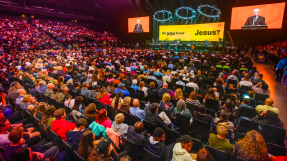
Franklin Graham preaches with warning from Sodom in Manchester
Franklin Graham used the biblical story of Lot’s flight from Sodom to urge thousands in Manchester on Saturday night to seek forgiveness through Christ and accept His gift of salvation.
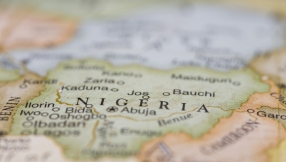
More than 4,200 Christians killed in Nigeria this year - report
More than 4,200 Christians have been killed in Nigeria so far this year, according to a new report calling for stronger action to protect communities facing violence across the country’s Middle Belt.
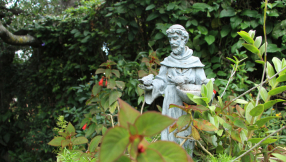
800 years on: Why St Francis of Assisi still captivates the world
4 October is St Francis’s Day, when Christians around the world remember the life and witness of Francis of Assisi. This year’s observance has particular significance, marking the 800th anniversary of his death. This is the story …








