A leading Christian think tank has claimed that Christians should be humanists – and that humanists should be Christians, with support from former Archbishop of Canterbury Rowan Williams. However the British Humanist Association called the report "provocative" and "aggressive".
The report from Theos: "The Case for Christian Humanism: Why Christians should believe in humanism, and humanists in Christianity," argues that 'humanistic' values such as democracy, human rights and artistic expression are best supported philosophically by Christian belief.
It gives details of the Christian foundation for three humanistic fundamentals: our being rational, ethical and believing in human dignity.
Authors Angus Ritchie and Nick Spencer say that humanistic creeds "are consonant with Christianity and worthy of Christian support" but also that "only belief in God can provide a sufficiently robust philosophical foundation to sustain some of [humanism's] most fundamental claims."
However, Andrew Copson, chief executive of the British Humanist Association, said that the report was "needlessly aggressive," an "unnecessary distraction" and "provocative".
"There are obviously lots of things that Christians and humanists agree on, that's good and not surprising," he told Christian Today. "It's more constructive if people don't take a colonial attitude and plant their flag on someone else's worldview for the sake of it."
He said that it was a 'shame' that Theos had argued that humanism is best supported by Christian beliefs, because some of the points the report raises about how to found morality and rationality are important. He states that Christian beliefs do not give a better philosophical foundation for morality and human dignity, and will be writing a response ahead of a public debate on the report in Spring.
"In Christianity, the reason for taking [morality, human dignity and rationality] seriously is that we are children of God, which is inescapably a non-humanist attitude," said Copson.
Nick Spencer of Theos said, "I sincerely hope nothing we say is provocative or aggressive. The piece is in defence of humanism, that's something they should celebrate."
The report was at pains to make clear that it is not claiming that Christians are more likely to have humanistic values, or be more moral or rational. "Rather, the argument is simply that many of the 'fundamentals' of humanism find their origins in Christian thought and commitments and that these fundamentals can ultimately only be sustained by those faith commitments," said the report.
For example, atheists would argue that human rationality is purely the end product of an entirely mindless evolutionary process. But the report cites Oxford philosopher Ralph Walker, who claims that atheist humanism may "cut off the very branch it needs to sit on; that is to say, its account of how our powers of reasoning emerged undermines our grounds for trusting those powers". Atheist philosopher Thomas Nagel has also argued that evolution is not a sufficient explanation for human rationality.
The Theos report argues that historically, Christians have varied in the degree to which they consider original sin to have damaged our rational capabilities – but that Christian fathers as far back as the 2<sup>nd Century's Justin Martyr have argued that human rationality is an essential part of our bearing the image of God.
"To many readers – religious and non-religious alike – our conclusion will seem surprising," the report reads. "Readers used to the message that "faith" and "reason" are opposed, even that Christian faith involves an abandonment of rationality, will find it quite incredible that Christianity could turn out to be the greatest defender of human reason.
"If we consider a rather longer historical perspective, however, this conclusion will seem much less surprising. From its very first century the Christian church has taught that the human capacity for reasoning is a gift from God."
In addition, the authors state that the Christian belief in humans bearing the image of God gives a foundation for the humanistic belief in human dignity and worth. Also, that belief in a loving God and his being the foundation of morality, provides a sturdier foundation for ethics.
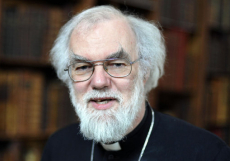
Williams said in the forward that the report "offers grounds for a reaffirmation of the bold claim that the gospel invites all into a fuller, not a narrower, human reality."