
The Most Reverend Vincent Nichols, Catholic Archbishop of Birmingham, has criticised the government during his homily at St Chad Cathedral's annual Civic Mass, in Birmingham, in which he warned that what is lawful is not necessarily moral.
|PIC1|Archbishop Nichols highlighted the fact that modern day society is so focused on finding out what was legal, that often it forgot whether the decision would be morally correct.
He said, "The process of secular democracy in our country at this time, while claiming to act disinterestedly and in a morally neutral fashion is in fact engaged in an intense and at times aggressive reshaping of our moral framework," according to Independent Catholic News.
He added, "Indeed the secular agenda seems to propose that all we need is the clarification of what is lawful. But that is not so. Those who are elected to fashion our laws are not elected to be our moral tutors. They have no mandate or competence to be so. And the wise among them would not wish it, either."
Speaking on the correct method that the government and faith organisations should use, Archbishop Nichols said, "Those in government and political life rightly have a growing respect for the contribution made by the faith communities. What government must also realise is that it is not possible to seek cooperation with us while at the same time trying to impose upon us conditions which contradict our moral values."
Archbishop Nichols rebuked the government for using resources provided by faith schools while trying to confine them in a legal framework. He continued, "It is simply unacceptable to suggest that the resources of the faith communities, whether in schools, adoption agencies, welfare programmes, halls and shelters can work in cooperation with public authorities only if the faith communities accept not simply a legal framework but also the moral standards at present being touted by Government. That is the road to the damaging of key partnerships. And what will suffer is our common good."
He said: "Each of us will have a vision of how we would like our world, our society to be. Certainly we look to our politicians to play their part, but the essence of civic life is the recognition that our dreams can only be made real through thorough cooperation and partnership between us all.
"This is important to understand because many today still wish to propose that our common enterprise can somehow be conducted in morally neutral terms. In this secular perspective, it is suggested that moral judgement is a private matter, not to be brought into the public, or especially, the political arena.
"Laws are more effective when they express the moral vision of a society. But when our moral vision has been neglected, or even marginalised, then the temptation to rely on the law as the moral guide becomes, for some, irresistible."
Indicating his firm opposition to some of the controversial methods of laboratory works into stem cell research, the Archbishop stated: "Take the issues surrounding the beginnings and endings of human life. Public opinion and medical technology are invoked as a basis for coming to a judgement about the quality and worth of the life of another person."
Another example he used was that of civil partnerships: "Take the notion of the family and the moral equivalence being forced upon us between marriage of a man and woman, on the one hand, and on the other, a legally recognised partnership of two people of the same sex.
"In contrast to this process, there is a profound conviction, shared by all the great religious faiths, all present in the city of Birmingham, that moral norms cannot be decided by the ballot box or parliamentary debate. That is not a way for arriving at the truth of our human condition or at a full understanding of our needs and potential."
Promoting faith and reason as the backbone of the Church's work, Archbishop Nichols said: "Rather, in these impenetrable matters, the graciousness of God is at work, casting invaluable light on our struggles and guiding us into ways that are wholesome and true. We need both faith and reason for this enterprise.
"The great benefit of our wider civic society is that it gives us the opportunity to work together both within and beyond the proper boundaries of the political processes. Indeed such avenues of cooperation are crucial. We need all the wisdom we can find and share if we are to tackle the moral conundrums of our day."
He concluded saying: "The more clearly we faith communities express ourselves, the more fully we cooperate together, the less possible it is for those who wish to do harm to use religious faith as a cloak for their violent intent."




-

Edinburgh University ends divinity programmes as theology faces a changing future
-

Why the Archbishop of Canterbury’s award controversy matters
-

More than one in four US Protestant churchgoers believe some biblical truths become outdated
-

Catholicism in France has 'collapsed'
-

Christian leaders issue ‘sober and urgent call’ for Western Church to prepare for disruption
-

Australia's anti-therapy laws harm the most vulnerable - Britain should not copy them
Most Popular
related articles
British Baptists Pass Resolution Opposing Replacement of Trident Nuclear System
British Baptists Pass Resolution Opposing Replacement of Trident Nuclear System
Gay Rights Laws Fast-Tracked in Northern Ireland, Warns LCF
Gay Rights Laws Fast-Tracked in Northern Ireland, Warns LCF
Legislation Not Enough to Address Security Threat, warns Sentamu
Legislation Not Enough to Address Security Threat, warns Sentamu
Christian Lawyers Criticise Northern Ireland Sexual Orientation Regulations
Christian Lawyers Criticise Northern Ireland Sexual Orientation Regulations
News

Active faith linked to happier marriages and lower divorce rates, study finds
People who regularly attend church are more likely to report happy marriages, according to a new report examining the relationship between faith and family life.
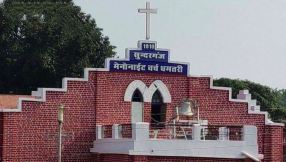
Indian churches fearing anti-conversion laws tell non-Christians: enter at your own risk
Churches in Dhamtari, a town in the central Indian state of Chhattisgarh, have put up notices warning non-Christians that they enter at their own risk, weeks after a law against religious conversion came into force in the state.

£1k bursaries to help churches develop youth and community mentoring programmes
Churches across the UK are being offered bursaries to help them establish mentoring programmes aimed at supporting young people and others in their communities.
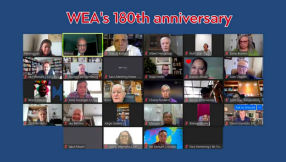
World Evangelical Alliance celebrates 180th anniversary
The World Evangelical Alliance (WEA) has held an online celebration to mark its 180th anniversary. Hundreds of people from more than 22 countries attended, and the event was rebroadcast to accommodate different time zones.








