
Bishops in the House of Lords are a “key voice” for social justice and the poor, the Church of England’s governing body heard today.
The Bishop of Leicester, the Rt Rev Tim Stevens told General Synod that aside from the Lords spiritual, the voices speaking up for the poor before Parliament were “few and far between”.
He said there was a “great opportunity” for bishops to speak up on the “scandal” of widening inequalities in society after the Lords spiritual helped to defeat the Government’s plans to introduce a £26,000 cap on benefits.
The bishop said: “Members of Synod may have noticed in recent weeks members of Lords spiritual being heavily involved in some of the fundamental reform agendas going through Parliament – health and social care, legal aid, welfare reform.
“There have been many conversations behind the scenes with ministers this week. Such is the political mood that those voices prepared to speak unequivocally and sometimes unpopularly for the poor are few and far between.
“A great opportunity now presents itself for the Church of England to speak clearly about the common good, about social justice, about the scandal of widening inequalities.
“I believe that one key voice is that of the bishops in the House of Lords.”
The Government is considering reform to the House of Lords that would cut the number of bishops from 26 to 12.
Christopher Pye, a Synod member from the Diocese of Liverpool, suggested that such a move could be an “opportunity” for the Church of England to “save resources” and release bishops to serve elsewhere.
“I think we ought to take advantage of the fact that the House of Lords representation is going to go down to 12,” he said.
“Let’s release 10 of our bishops from their diocesan duties to let them concentrate on various national and international portfolios.”
A message was read out to Synod conveying support for the Lords spiritual from the leader of the Coptic Orthodox Church in Britain, Bishop Angaelos.
He said: "As we look upon the last twelve months in the Middle East, we find the desire of many for a democratic system that represents them and their interests, and in doing so we appreciate and value what we may take for granted on a daily basis in our own parliamentary system, regardless of its' occasional shortcomings.
"An essential part of this whole system is the House of Lords and within it the Lords Spiritual, who have among their many services the faithful representation of groups and peoples who suffer persecution or marginalisation. They are a moral and ethical compass within the parliamentary centre of the political life of these lands."
CORRECTION NOTE:
The original article of 10/02/2012 incorrectly attributed comments to Bishop Angaelos suggesting that the presence of bishops in the House of Lords was a way of preventing cronyism. We apologise for any confusion caused.


-

UN officials demand explanation for Iranian church seizure
-

AI could become a ‘very dangerous master’, warns John Lennox
-
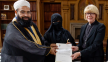
Archbishop of Canterbury withdraws award given to Muslim cleric who praised Bin Laden
-
Calls for Church of England to be 'rooted in scripture' ahead of General Synod elections
-
Most practising Christians are evangelical, study finds
-
Church of England blessing same-sex relationships 'a bridge too far'
Most Popular
News

People view religious education positively, study finds
The government is consulting on plans to add RE to the national curriculum.
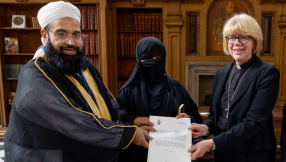
Archbishop of Canterbury withdraws award given to Muslim cleric who praised Bin Laden
Reform leader Nigel Farage said the decision to award Hafiz Muhammad Tahir Mehmood Ashrafi was "astonishing".
How the new General Synod could move beyond the present disagreement over same-sex relationships
How might the next Synod make progress in the next five years based on a recognition that there are those in the Church of England who hold fundamentally opposed positions on the matter? Is there a way of allowing both sides to achieve what they want? Martin Davie argues that the answer to this question is ‘Yes.’
No part of London should become a free speech, gospel exclusion zone
Soho is not exempt from freedom of speech and Christian expression. And Christians do not lose their fundamental freedoms when they cross an invisible boundary into a neighbourhood associated with a different worldview. The streets of London belong to all of us, writes Andrea Williams.








