Baroness Joan Bakewell wins award for 'outstanding' religious broadcasting

Baroness Joan Bakewell has won the prestigious Sandford St Martin Trustees' Award for religious broadcasting.

The Labour peer and former BBC journalist will collect the award at a ceremony at Lambeth Palace on June 8. In a statement ahead of the awards, the Sandford St Martin Trust said the award was "in recognition of her outstanding commitment to religious and ethical broadcasting over six decades".

Bakewell made her career as a television presenter for the BBC2 programme Late Night Line Up and went on to present BBC1's Heart of the Matter from 1988 to 2000. The programme explored issues around belief and ethics.

One of her former editors Roger Bolton, who is a Sandford St Martin trustee, praised her "cool precision, intelligent understanding and great sympathy for those caught up in difficult dilemmas".

Bakewell was also a radio presenter for BBC Radio 3's series Belief and BBC Radio 4's Inside the Ethics Committee and became President of Birkbeck College in April 2013.

Now a Labour peer in the House of Lords, Bakewell uses her position to ensure "debates about ethics cut to the heart of the matter", Bolton said.

The award will be presented by the Classics professor Mary Beard, who is also a friend of Bakewell. Beard said: "Joan deserves this award because of her long contribution to serious, compassionate, ethical broadcasting – facing difficult issues in an approachable but never simplifying way."

The Sandford St Martin Trust has organised annual awards for broadcast programmes about religion, ethics and spirituality since 1978 and introduced the Trustees' Award in 2013 to "recognise significant contribution to religious understanding in the media or the arts". Previous winners have included Professor Simon Schama, Ian Hislop, David Suchet and Rabbi Lord Jonathan Sacks.


related articles
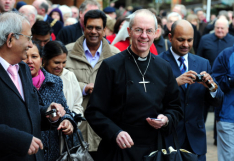
Religious programmes shouldn\'t just be at Easter and Christmas, says Welby
Religious programmes shouldn't just be at Easter and Christmas, says Welby

The Archbishop of Canterbury Justin Welby is calling for more religious broadcasting all year round.

BBC cuts back on religion and ethics spending

Church of England bishops accused the BBC of sidelining faith by planning big cuts to religious programming.

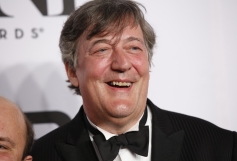
Stephen Fry\'s \'God is evil, capricious and monstrous\' interview up for religious award
Stephen Fry's 'God is evil, capricious and monstrous' interview up for religious award

The notorious Stephen Fry interview in which he denounced God as "utterly evil, capricious and monstrous" is up for a religious broadcasting award.

Gogglebox vicar says TV is better than sermons at getting people talking about God

TV vicar Kate Bottley has suggested that her appearances on Gogglebox might be more effective at evangelisation than the traditional Sunday sermon.

News
Why the NEET crisis is a challenge for the Church

Let’s not view the needs of our young people as a problem to be left to government.

Photo exhibition puts deaf, disabled and neurodivergent Church of England leaders in focus

The touring exhibition ‘Called as we are’ shares the portraits and personal stories of 12 deaf, disabled and neurodivergent Church of England leaders, exploring how their experiences shape their ministry.

Britain condemns violence against Christians in Ethiopia

The British government has condemned anti-Christian violence in Ethiopia and said it is supporting the African nation’s Human Rights Commission in its investigations.

Rise in young people who are virgins, but porn and sexting are common

The number of young people who say they are virgins has seen a dramatic increase compared to previous generations, but pornography and sexting are common in younger age groups, and same-sex interactions are increasing.