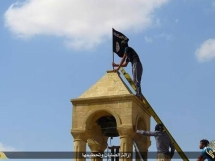
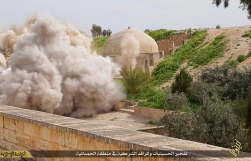
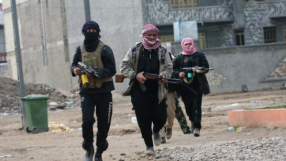
An ancient synagogue in Iraq that is believed to house the remains of the Old Testament prophet Nahum is under threat from Islamic State forces.
The synagogue is in the city of Al Qosh on the Nineveh plain and is thought to have been the home of "Nahum the Elkoshite" (Nahum 1:1), who lived around 2,600 years ago. It is only only 10 miles from the front line with Islamic State.
Nahum prophesied against the Assyrians in his book, which contains striking images of battle and warfare.
The Jewish population of Al Qosh fled in the early 1950s following persecution by the Iraqi government after the establishment of the state of Israel. However, an Assyrian Christian family has been caring for the synagogue and the tomb ever since.
"When the last Jewish people in Al Qosh left, they asked my grandfather to watch over the tomb, to keep it safe," Asir Salaam Shajaa told Haaretz. "I don't know much more than that.
"Nahum is not our prophet, but he is a prophet, so we must respect that. He's a prophet, it is simple."
Before the Jewish population left Iraq the shrine was a noted place of pilgrimage, with thousands visiting it each year. The synagogue is semi-derelict but Shajaa's family continues to care for it as best they can.
"I keep an eye on this place," he told Haaretz. "My wife comes and sweeps the floors every week, and when we have a visitor who wishes to see or worship at the tomb, they are told to come to my house. I open the gates for them and let them in. We don't get many visitors, though," he said.
While there has been talk of restoring the synagogue and tomb in the past, the present state of Iraq makes this a very remote possibility; even if the militants can be defeated the country will have many other priorities.
Al Qosh has become a home for refugees fleeing violence elsewhere in the country. Shajaa himself wants to leave Iraq for the West if he can. "I'm not sure how long my family will continue to stay in Iraq, we want to leave, most of the Christians want to leave," he says. "My brother says he will stay though, if my family gets to leave Iraq my brother and his children will look after the tomb. It will stay in the family, God willing."