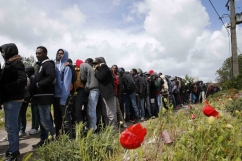
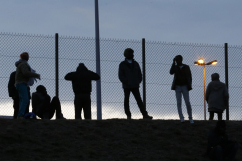
The images from Calais that we've seen broadcast into our living rooms, evening-by-evening, through this summer make our hearts sink. The crowds of desperate men, women and children who have travelled half way around the world to escape war and poverty, only to find themselves living in the hell of the so-called 'Jungle' migrant camp on the outskirts of Calais, disturb us deeply.
The origins of these people read like a guide to the world's most troubled regions – torn from countries such as Syria, Sudan and Afghanistan. Some of the commentary and coverage of their struggle has, however, been as distressing as it's been predictable, as it further dehumanises those who have already battled against such great adversity. It is for this reason that I applaud the bold decision of BBC Religion to give these people a voice in this week's Songs of Praise.
The programme's producers have been lambasted on social media as well as by sections of the press and a handful of politicians for 'wasting taxpayer's money' and, for that greatest of all religious sins, of 'becoming political'. In my view, however, tackling this complex humanitarian issue is exactly what Songs of Praise should be doing.
The role of the television show, which is essentially about Christian faith, means the only way in which it can authentically fulfil its mandate is to deal with the tough issues of life, alongside the joys, faced by individuals as well as whole communities.
Back in the '90s I was a presenter for Songs of Praise. Amongst the shows that I remain most proud of were those we made in South Africa, soon after Nelson Mandela was elected president, about the struggle against Apartheid, and another special programme I co-presented with Sally Magnusson the weekend after the Dunblane school massacre. It is Sally who will present the segments of next Sunday's programme from Calais.
Religion should never be divorced from the rest of life – to attempt to do so is to empty it of any meaningful content. Indeed, the original definition of the word religion is simply reconnection; with God, with ourselves and with others. Biblical spirituality is always about the whole of life.
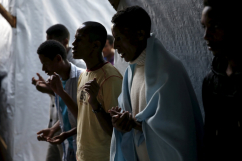
The very title of the BBC's religious flagship show is, of course, a nod to those ancient songs of praise, otherwise known as the Psalms. These contain as many lyrics of lament and doubt as of thanksgiving and celebration – and they teach us that genuine biblical faith, as it seeks to cling to God, does not fear to question pain, speak honestly of despair or to challenge injustice. So, it turns out that it is exactly amongst the worshipping yet struggling people of the Calais 'Jungle' camp that the Songs of Praise team ought to be recording.
In the end, one of the litmus tests for any edition of Songs of Praise must always be this: is it being filmed where Jesus would most likely be found? Would Jesus shy away from those excluded from the mainstream of life, choosing instead the sanctuary of a well-lit cathedral, or would he be amongst the poor and dispossessed? If Jesus were a Songs of Praise presenter – and I'm not suggesting that would necessarily be his primary career choice – the migrant camp in Calais is exactly the kind of place that, I believe, he would choose to spend his time and broadcast from.
Jesus had much to say about those who his society viewed as the least, those who were marginalised, oppressed and rejected. Indeed, Jesus himself was a migrant. So, in response to the charge that Songs of Praise is politicising religion, the obvious response is that far from teaching that religion and politics didn't mix, it was Christ himself who insisted that it was, in fact, faith and apathy that would never sit comfortably together.
I applaud the Songs of Praise production team for the role that their upcoming programme is already playing in helping us to table the conversation around the relationship of faith to this huge, but constantly developing, international crisis. Indeed, in my view, their brave and wise investment of a tiny part of the licence fee will only help us more clearly focus one of the growing moral issues that life in our, otherwise much sought after, globalised 21st Century world has created, and which none of us any longer can afford to ignore.