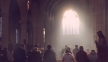
In contrast to most Anglo-Catholic affairs, the service on Good Friday at a 'high church' is markedly stark and bare.
There are no bells, no incense, no candles and no vestments (apart from during the distribution of the sacrament). Even the fonts of holy water are emptied.
It is a timeless way of heading deeper into Lent and the Passion story before the mysterious period between Good Friday and the vigil on Holy Saturday and joys of Easter.
Though an understated and highly solemn service, it begins with an element of drama. The clergy and supporting servers make their way from the vestry through the church and up to the altar in silence, before making a full prostration.
The gesture, aimed at demonstrating the abasement of humanity and the grief and sorrow of the church at the death of Jesus, sets the tone for the rest of the service, which moves straight into the Collect with no greeting.
Then comes the reading or chanting of Isaiah 52: 13-53:12, Hebrews 4: 14-16 and 5: 7-9 and, lastly, the entire Passion account from the Gospel of John, for which everyone remains standing.
This part of the Liturgy of the Word concludes with the orationes sollemnes, a series of solemn prayers for the Church, the clergy and laity of the Church, those preparing for baptism, the unity of Christians, the Jewish people, those who do not believe in Christ, those who do not believe in God, those in public office and those in special need. In between each prayer, the congregation may kneel for a few moments.
A very Catholic high church will then have the Adoration of the Cross in which a crucifix that is not normally presented, is solemnly unveiled and displayed before being venerated with individuals kneeling and kissing the wood of the cross amid hymns and chanting.
Holy Communion takes place after the reserved sacrament is brought in from the Lady Chapel where it will have been lying overnight on Maundy Thursday, having been consecrated at the evening Mass of the Lord's Supper. There is no singing of the Agnus Dei, as there usually would be during Communion, and no wine.
Finally, the priest, servers and people then depart in silence, and the altar cloth is removed, leaving an altar bare except for the crucifix.